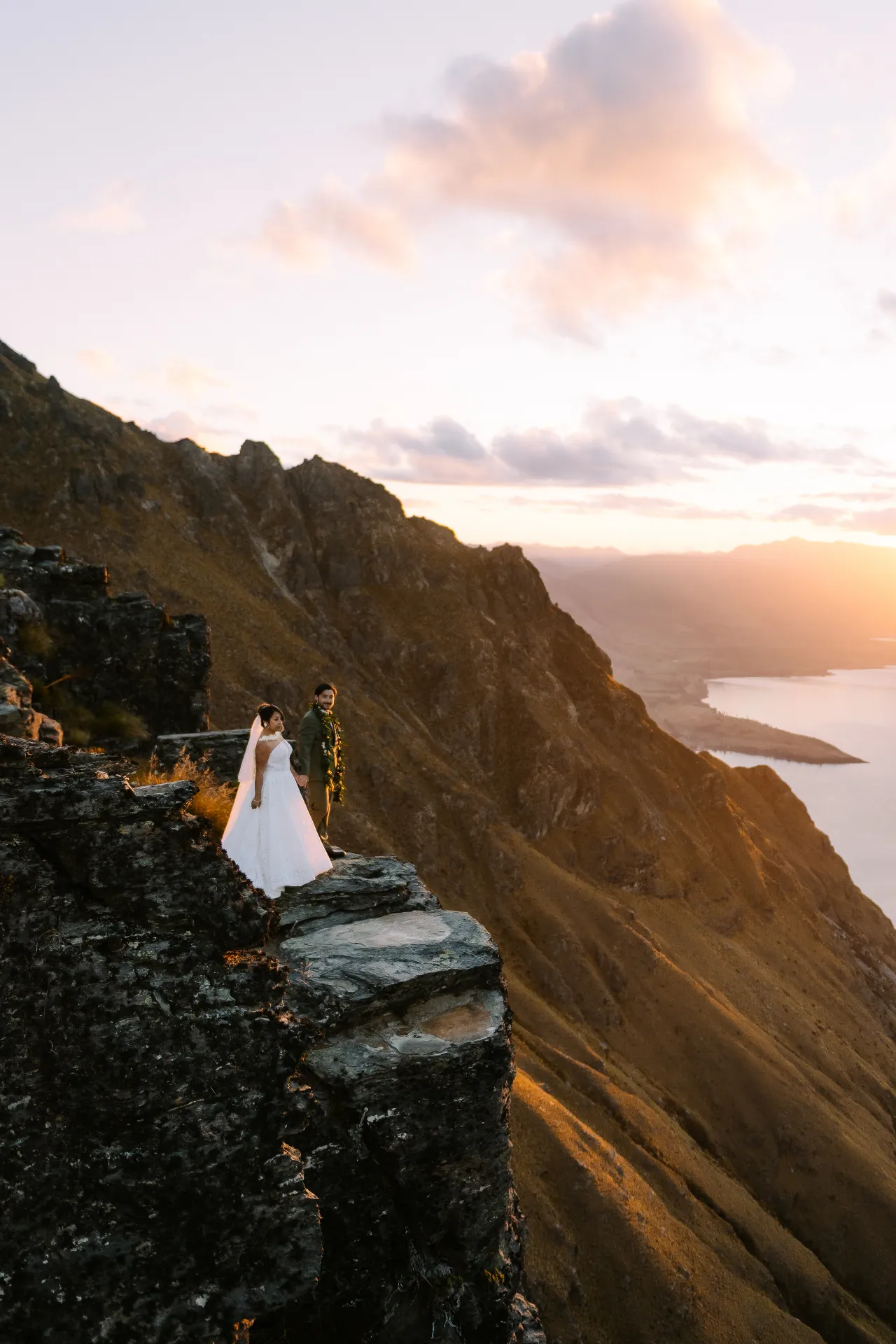
Cecil Peak
6–8 minute flight
The shortest flight to a true summit, so it is the most weather-forgiving heli option and the least expensive to reach. Summit wind and cold are real; the landing window is short.
Access by air
A heli landing is the most extraordinary thing you can do with an hour in Queenstown. It is also the most weather-dependent and the most expensive. Here is exactly what you are buying.
Last reviewed 21 August 2026
Roughly one in three couples who ask us about a helicopter should book one. The rest are better served by a drive-up viewpoint and the money spent elsewhere, usually on coverage, or on staying an extra three days.
A private charter buys three things: a landscape that has no road to it, total privacy for the ceremony, and aerial photographs of the two of you in country most people only see through an aeroplane window. It does not buy a longer day, the ground time is typically twenty to forty minutes.
Charter is priced by aircraft and flight time, not per person, up to the seat limit. That is why adding two guests can be free and adding four can double the cost: you have moved to a bigger machine or a second flight.
Helicopters do not fly into cloud, and mountain landings need visibility of the landing site itself. Rain is often survivable; a low cloud base on the tops is not. Sustained wind above the operator's limit ends the discussion regardless of how clear it looks from town.
The decision is made by the pilot, on the morning, and it is not negotiable. What differs between arrangements is what happens next, and that is the question to ask before you pay anything.
The practical mitigations are simple: hold two possible dates, keep a ground-based ceremony site confirmed as the backup, and build the rest of your day so it still works beautifully without a flight.
Side by side
| Factor | Ground ceremony | Helicopter ceremony |
|---|---|---|
| Landscape | Lake shorelines, river valleys, gardens and drive-up viewpoints. Big scenery, seen from within it. | Summits, glaciers and alpine lakes with no road to them. Scenery you look down on rather than up at. |
| Cost structure | Costs sit mainly in people, celebrant, photography, planning, flowers, transfers. Predictable and easy to trim. | Adds a charter cost that scales with flight time and passenger numbers, on top of the same ground costs. |
| Weather dependency | Rain and wind change comfort and can force a move, but a ceremony almost always happens on the day. | Cloud base and wind decide whether you fly at all. The call is made on the morning, not in advance. |
| Guest capacity | Comfortably two to about twenty, depending on the site and access. | Limited by aircraft seats. Larger groups need multiple flights, which adds time and cost. |
| Accessibility | Drive-up sites suit elderly guests, prams, limited mobility and anyone who does not want to walk far. | Requires being able to board and disembark on uneven alpine ground, sometimes in snow. |
| Privacy | Variable. Public reserves are shared with walkers and boats; private land and gardens can be fully private. | Effectively total. You are usually the only people on the landing site. |
| Planning complexity | Lower. Permits where required, a backup site, and a sensible timeline around the light. | Higher. Landing permissions, flight timing, luggage limits, a weather decision process and a held ground alternative. |
| Best fit | Couples who want certainty, guests, comfort and more of the day spent together rather than in transit. | Couples for whom the alpine location is the point, who can hold a flexible morning and accept a change of plan. |
The shape of a heli day
Two days before
The operator starts watching the forecast. Nothing is decided yet.
The evening before
First real read on wind and cloud base. Backup plans are put on standby.
Ceremony morning
The pilot makes the call, usually two to three hours before the flight.
Pre-flight
Safety briefing at the hangar or helipad. Ten minutes, and genuinely useful.
Flight out
Six to forty minutes depending on the landing site. Windows are enormous.
On the ground
Twenty to forty minutes: ceremony, signing, photographs, and silence.
Flight back
Often the best part, the same landscape, now yours.
Where you can land
Flight time is the cost driver and the risk driver. Shorter flights are cheaper and get cancelled far less often.
6–8 minute flight
The shortest flight to a true summit, so it is the most weather-forgiving heli option and the least expensive to reach. Summit wind and cold are real; the landing window is short.
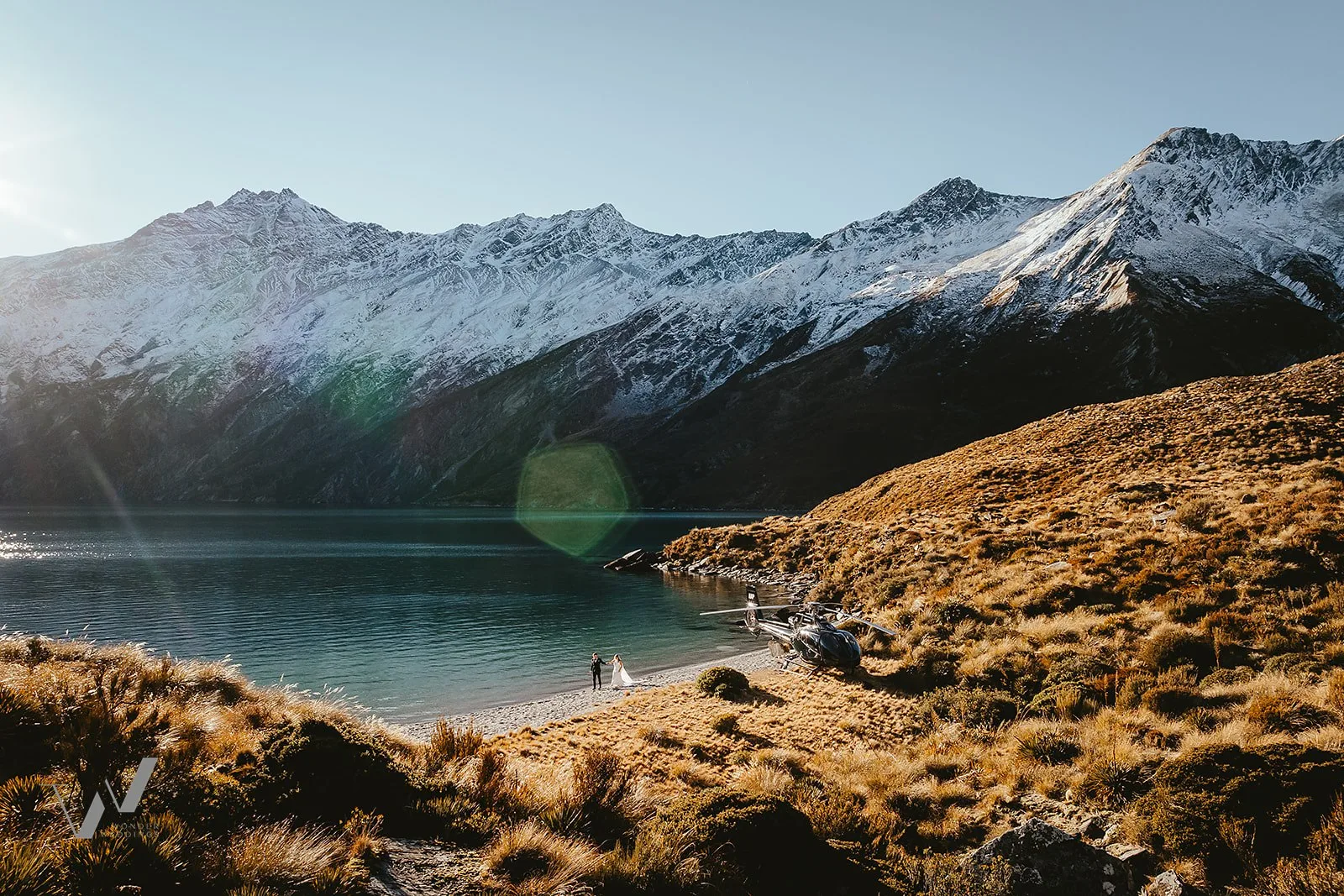
15–25 minute flight from the Queenstown heliport
Turquoise water, high tussock and rock walls in one frame, with near-guaranteed solitude: there is no road, no track worth walking in a day, and the surrounding country is a DOC hunting block rather than a tourist route. The trade-offs are cost and weather. It is one of the longer charters on the Queenstown list, and cloud sitting in the basin cancels more often than a lakeside or shoulder landing, so a genuine backup date or alternative site has to be agreed in advance.
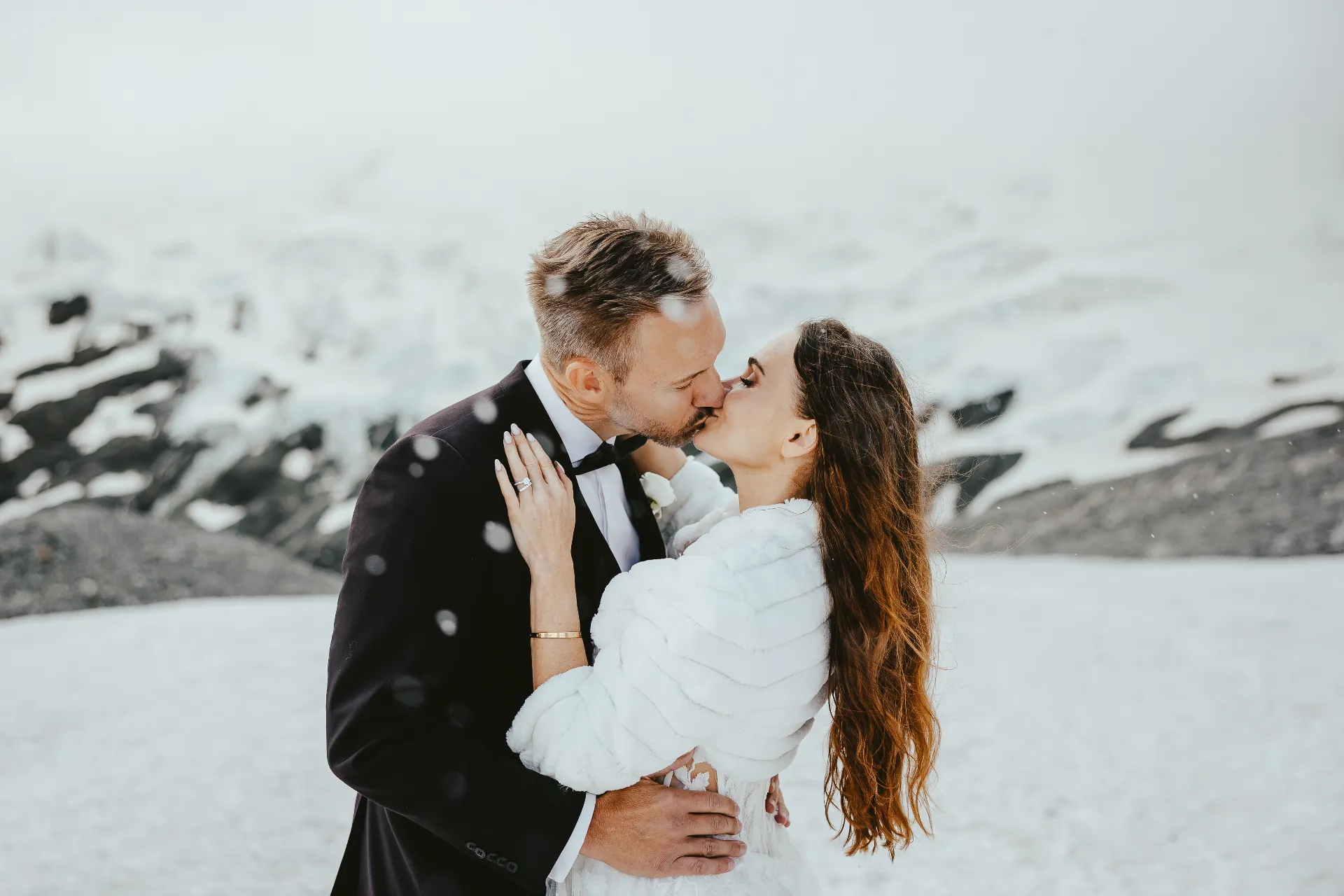
15–18 minute flight, depending on the glacier
The most extreme scenery available in a single day from Queenstown, and one of the few places you can stand in snow in February. Because several glaciers are available, your pilot can move you to whichever face is clear on the day. It is still the most weather-sensitive flight, and time on the ice is deliberately short.
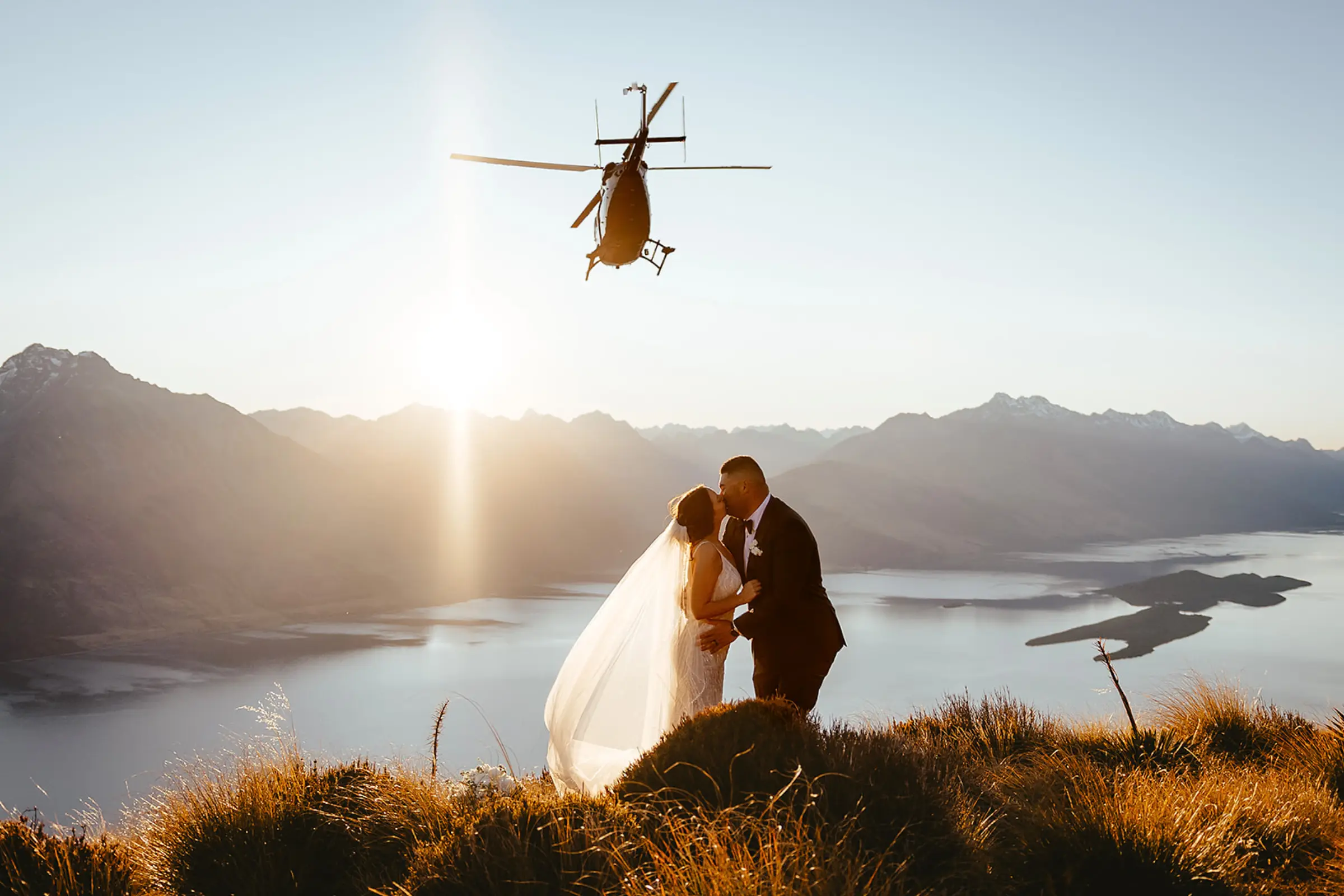
7–9 minute flight from the Queenstown heliport
This is the Coromandel Peak of Queenstown: the same ridge-and-water composition, the same aerial fly-by frames, at a fraction of the cost because the flight is 7 to 9 minutes instead of a cross-range charter. The trade-off is that it is a shoulder rather than a razor summit, so the drop-away is less severe than Coromandel Peak, and the site is popular enough that timing matters.
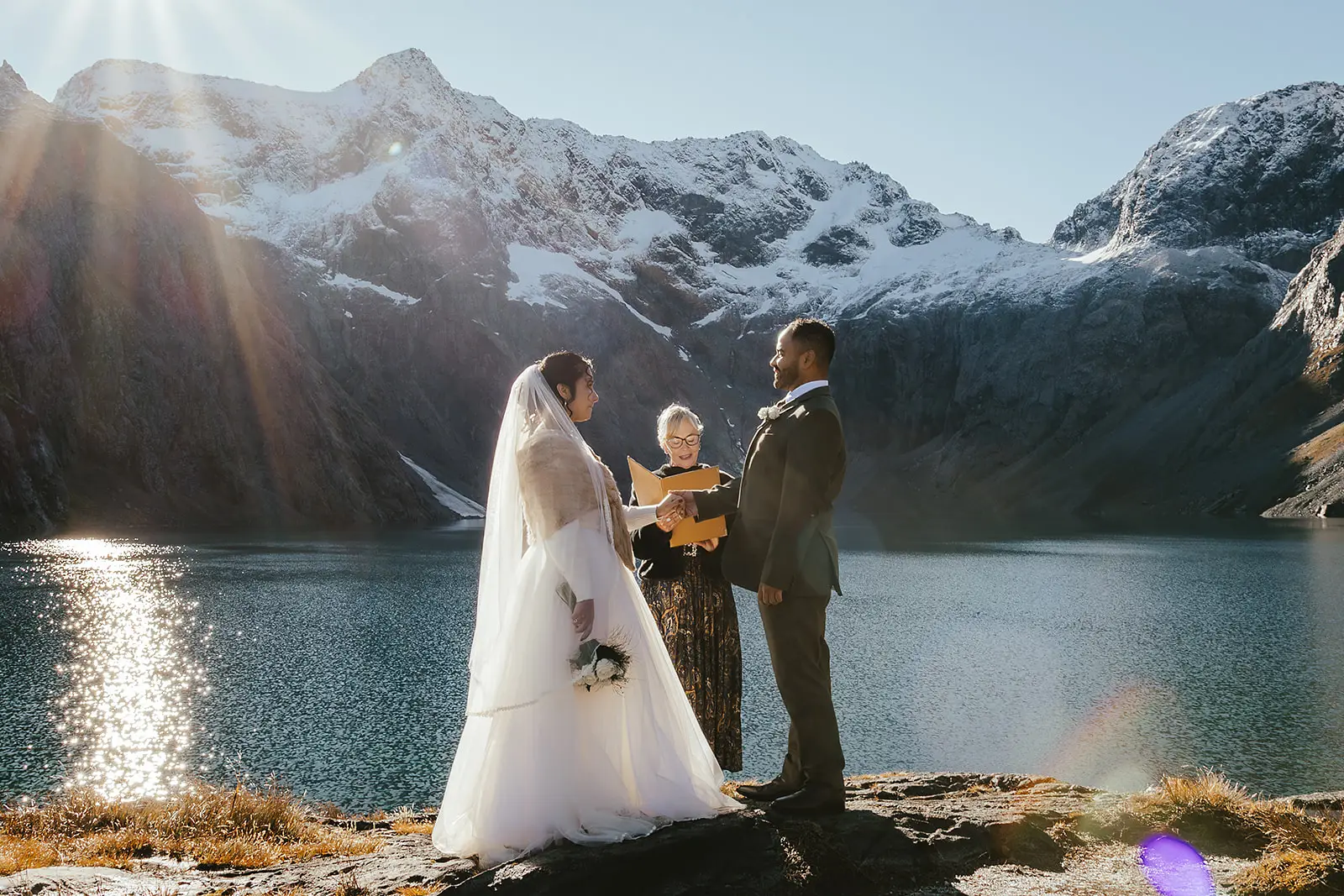
17 minute flight from the Queenstown heliport; also flown from Glenorchy
Up to three helicopters can land here, which caps the group at roughly nine guests and keeps the site feeling private. The lake typically freezes over in winter, so ceremonies during the peak winter months are not recommended: the ice changes how the site looks and behaves, and conditions at that altitude close the landing more often than they do lower down.
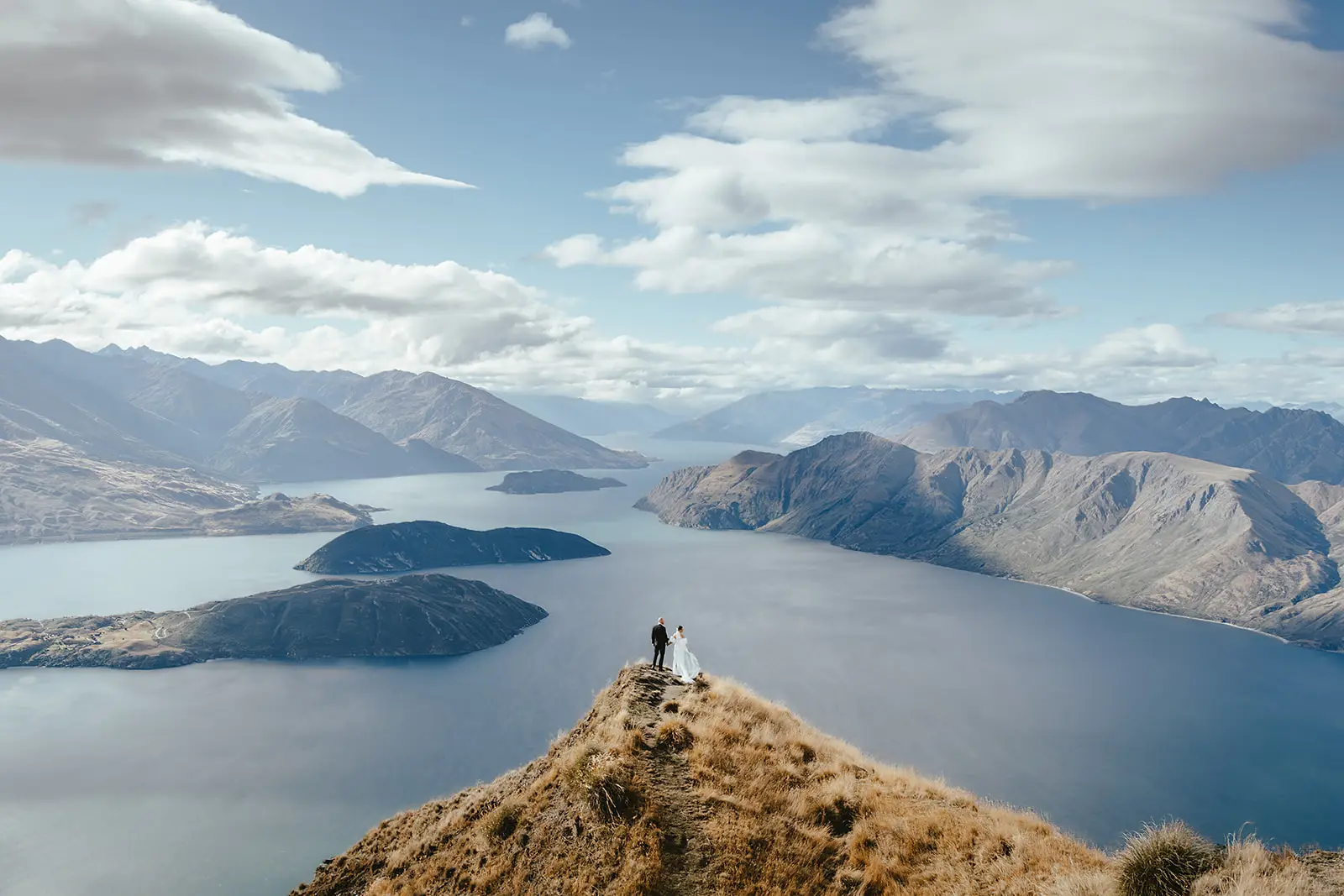
Flown direct from the Queenstown heliport over the Crown Range; a longer charter than a Wakatipu landing, with no road travel
It is the most recognisable aerial frame in the region, and the Wanaka side often flies when Queenstown is clouded in. Against that: it is a longer flight than a Wakatipu landing, so the charter costs more and takes a bigger bite out of the day. Ridge space limits guests, and time on the peak is short.
All landings depend on conditions and permission on the day. Compare these against ground-access sites.
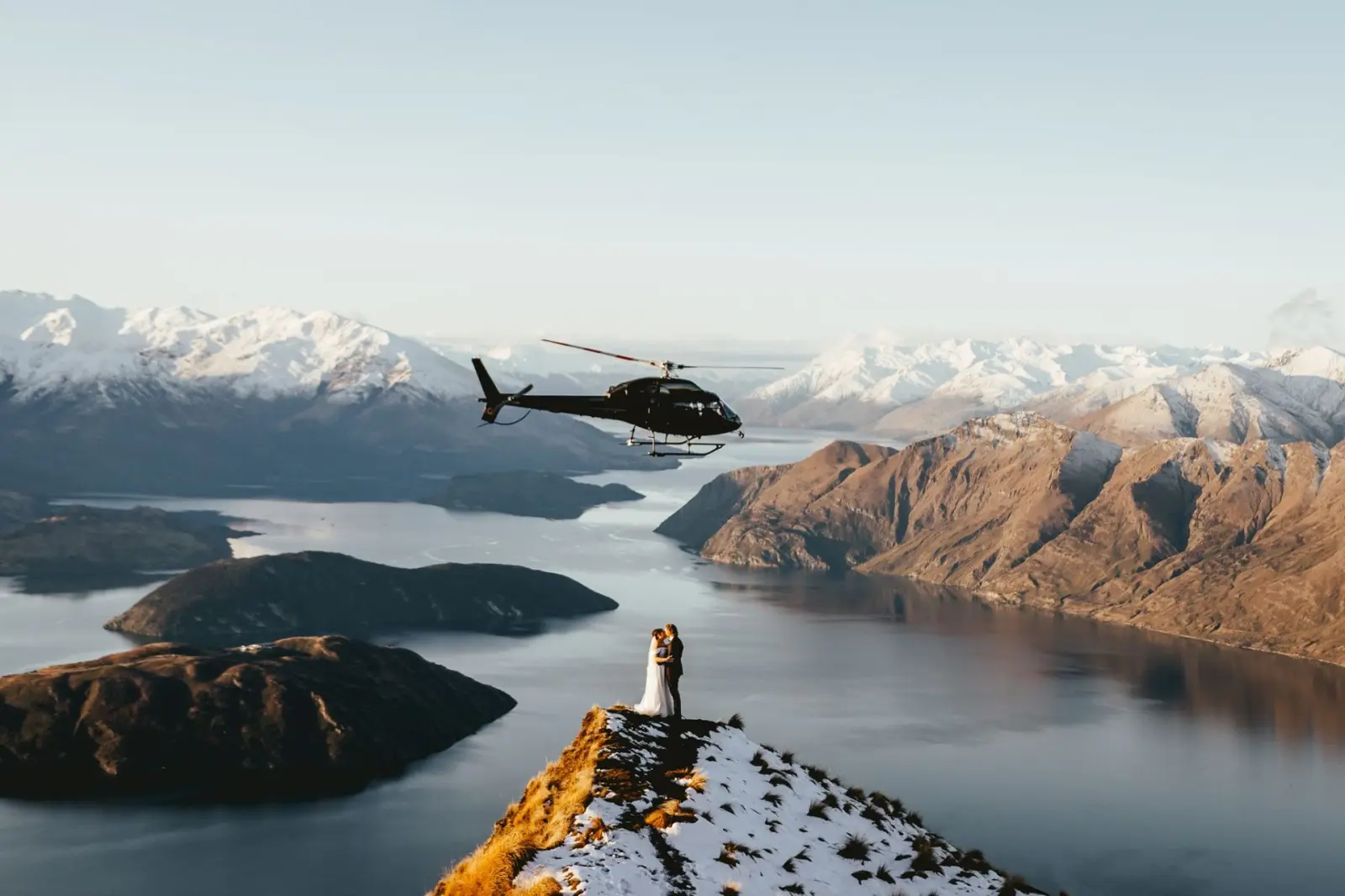
Coromandel Peak
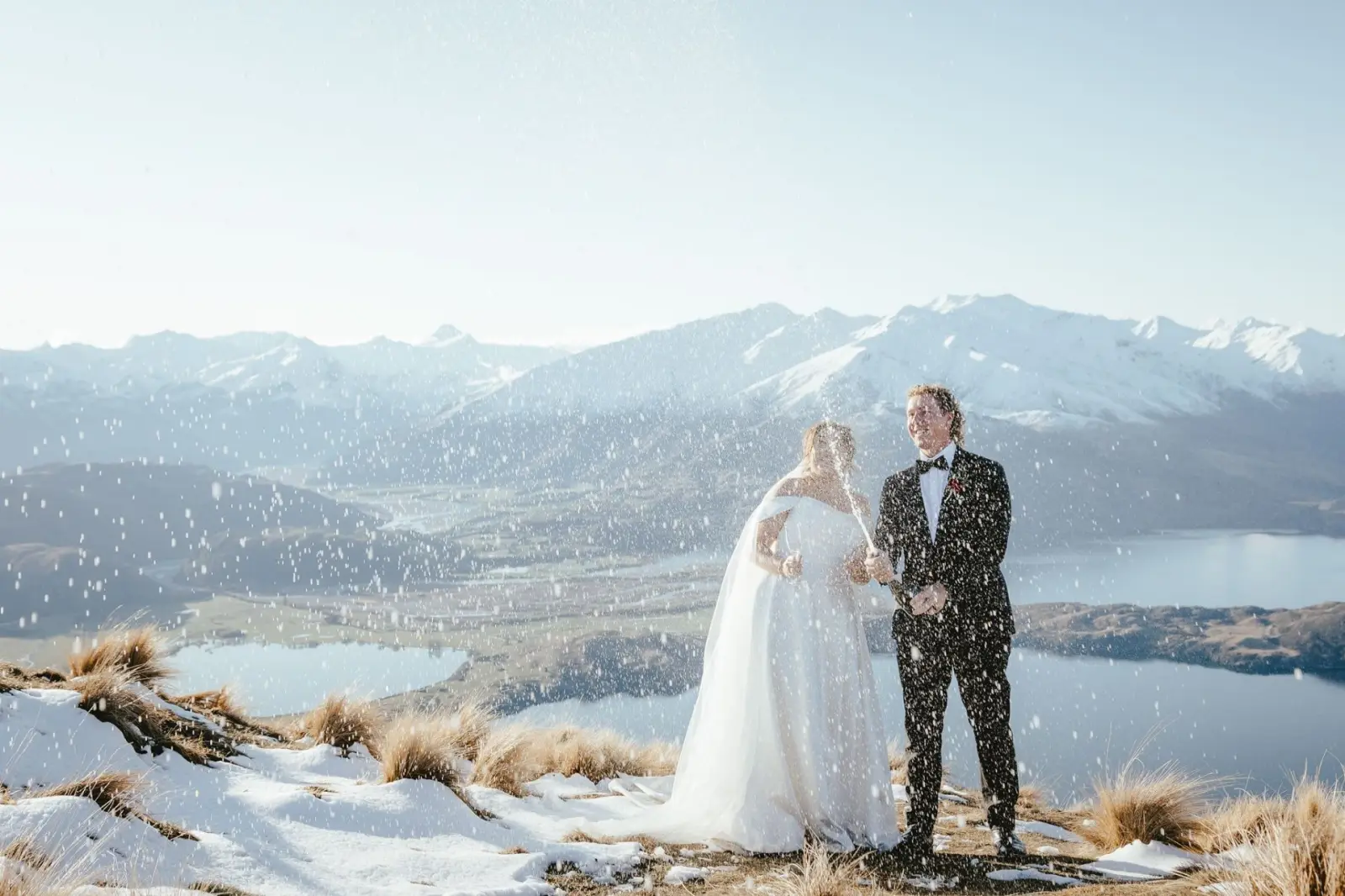
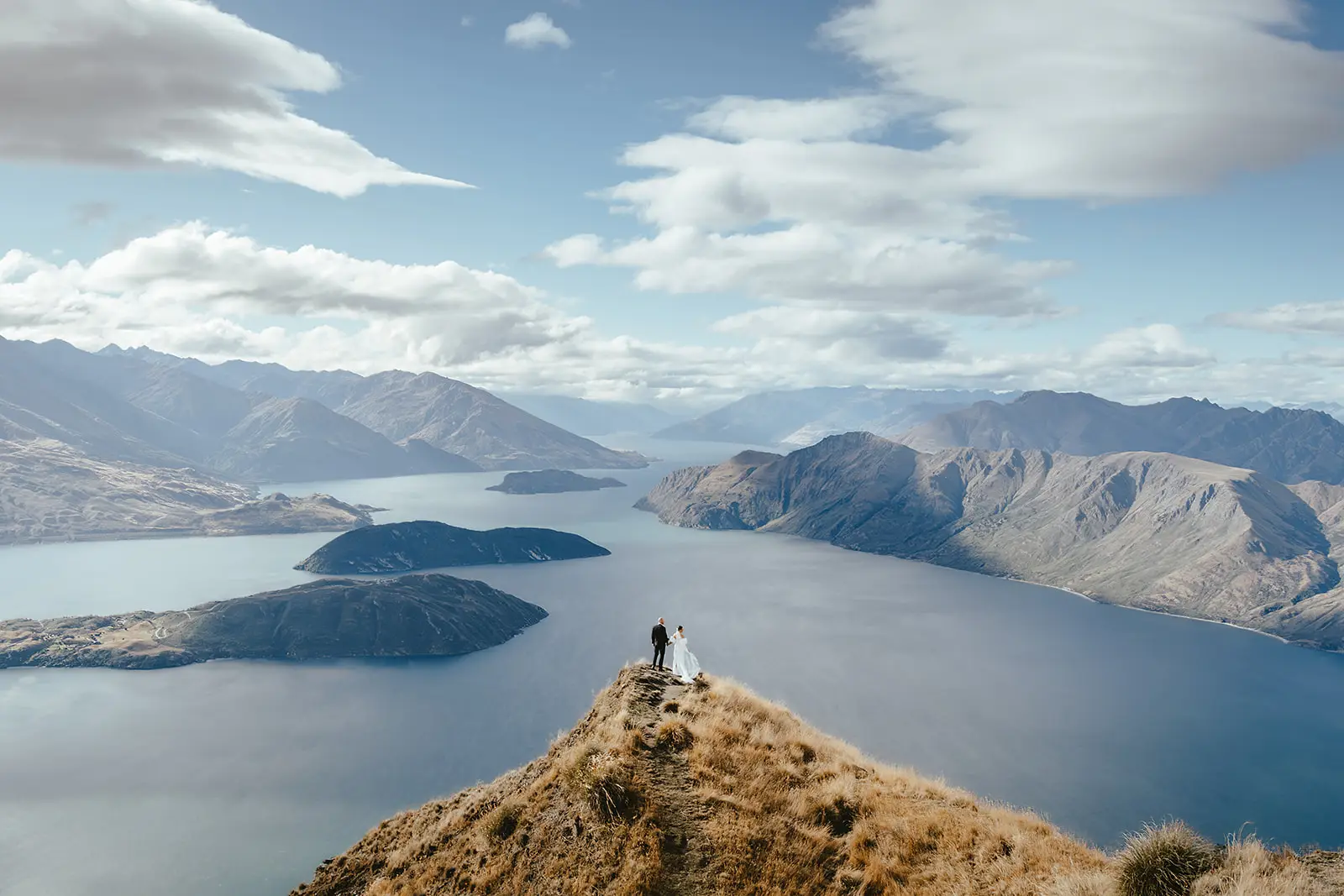
Coromandel Peak sits above Lake Wanaka, and we fly it directly from Queenstown. No drive over the Crown Range on your wedding morning.
Coromandel Peak, flown from Queenstown
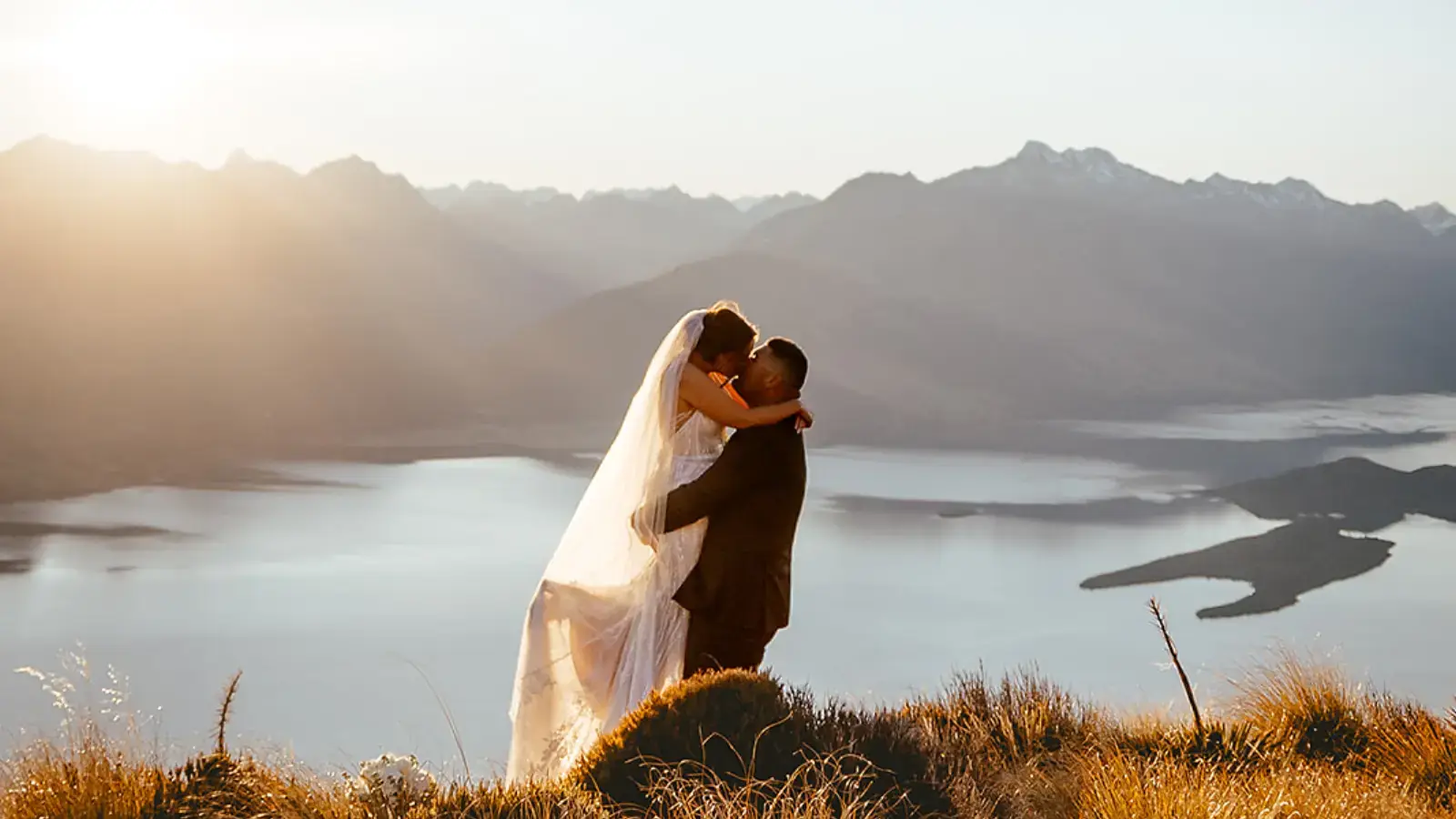
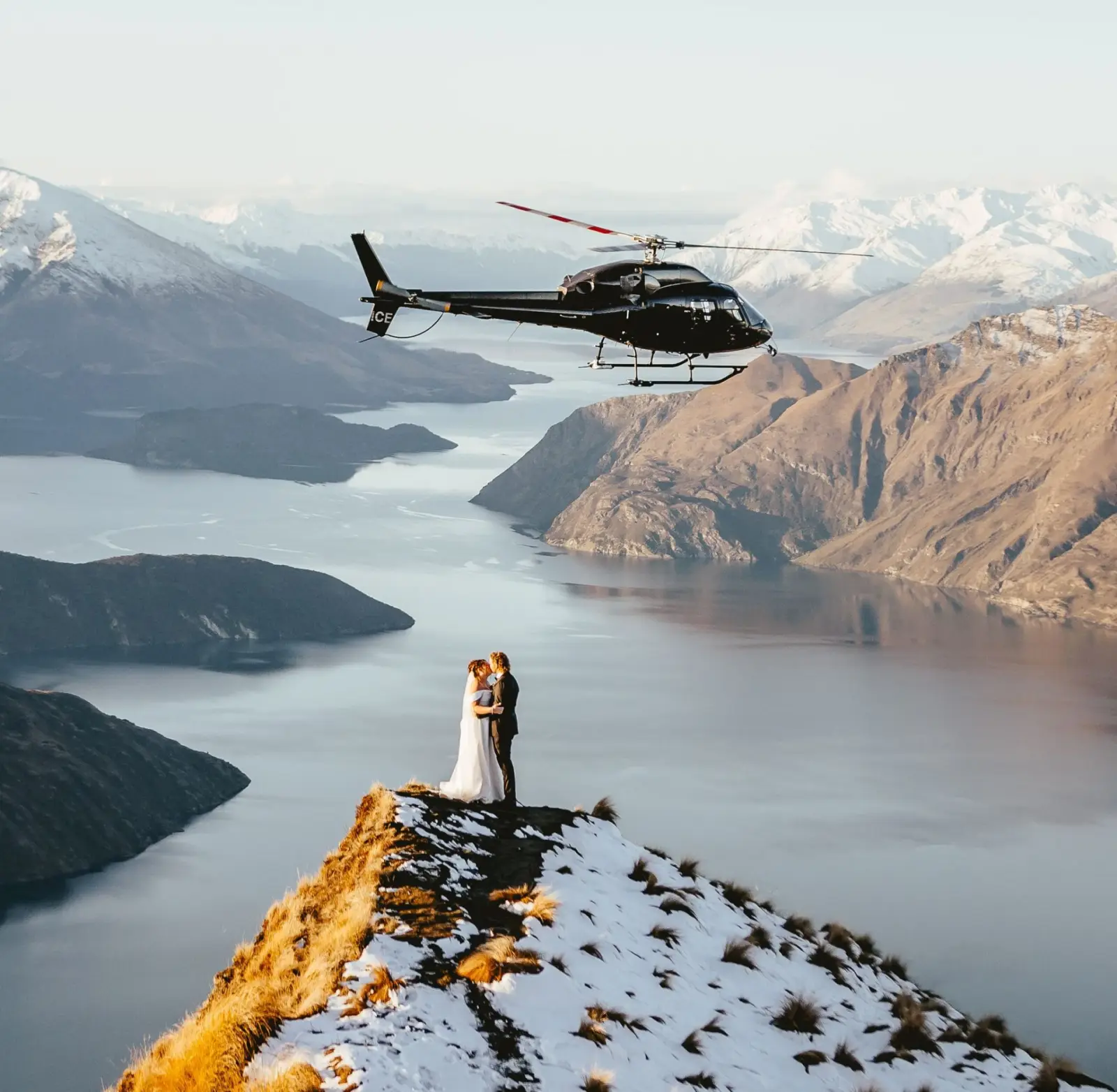
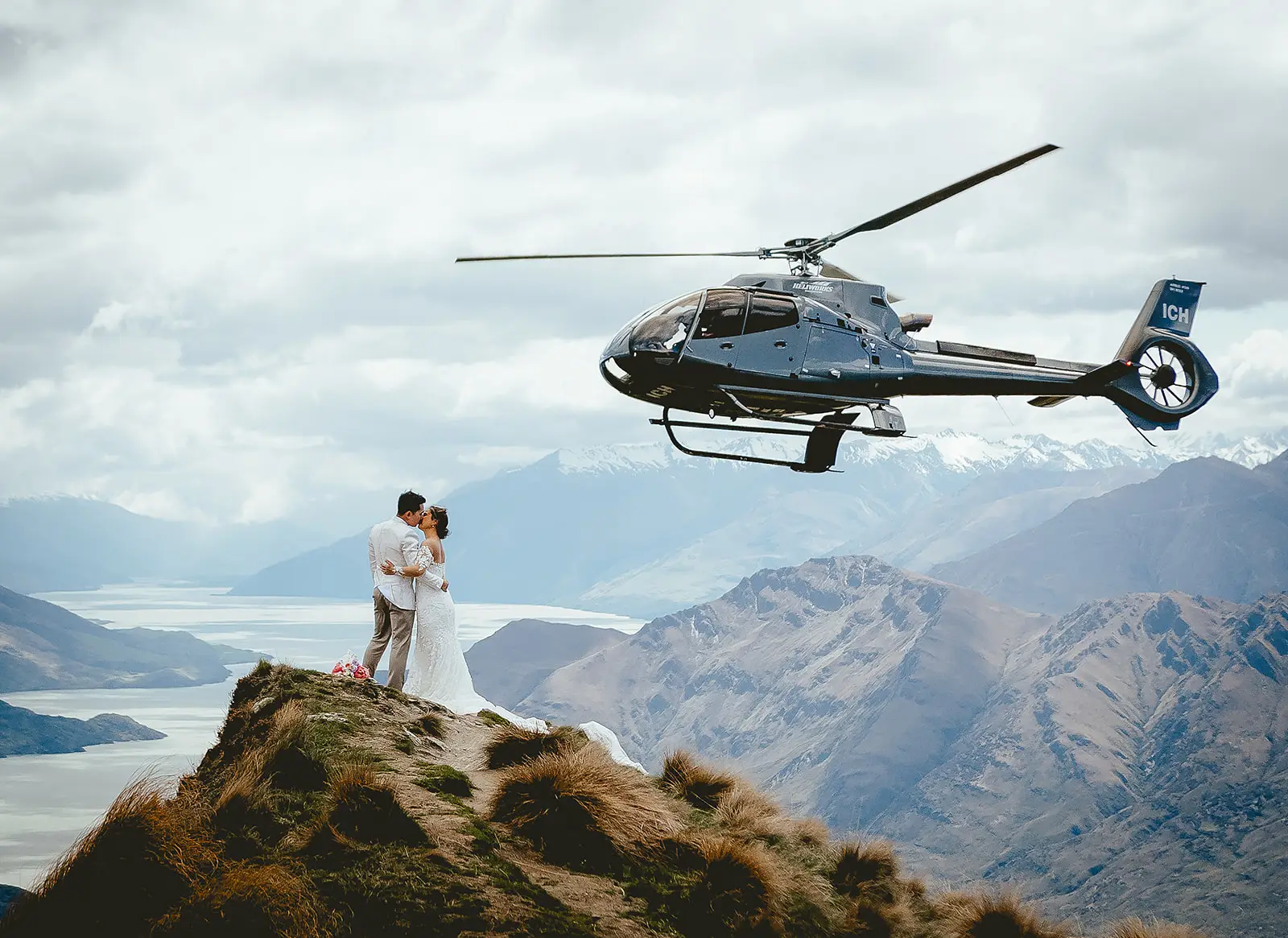
The single most recognisable elopement frame in the region, a couple on a knife-edge snow ridge with an island-scattered lake far below, is Coromandel Peak. It sits above Lake Wanaka, but you do not have to base yourself there: we fly it directly from Queenstown, lifting off from the Queenstown heliport and crossing the Crown Range on the way north.
That means no wedding-morning drive and no logistics split between two towns. You get a scenic flight over the ranges on the way in, time on the ridge, and the return leg back into Queenstown, all inside one heli booking. The trade is air time: it is a longer flight than a Wakatipu landing, so it costs more than a ten-minute hop above the lake.
The compensation is real: the Wanaka side of the divide often flies when the Wakatipu is clouded in, so a Coromandel Peak plan sometimes survives a day that would have grounded a Queenstown landing. We have moved ceremonies north for exactly that reason, without the couple ever leaving Queenstown by road.
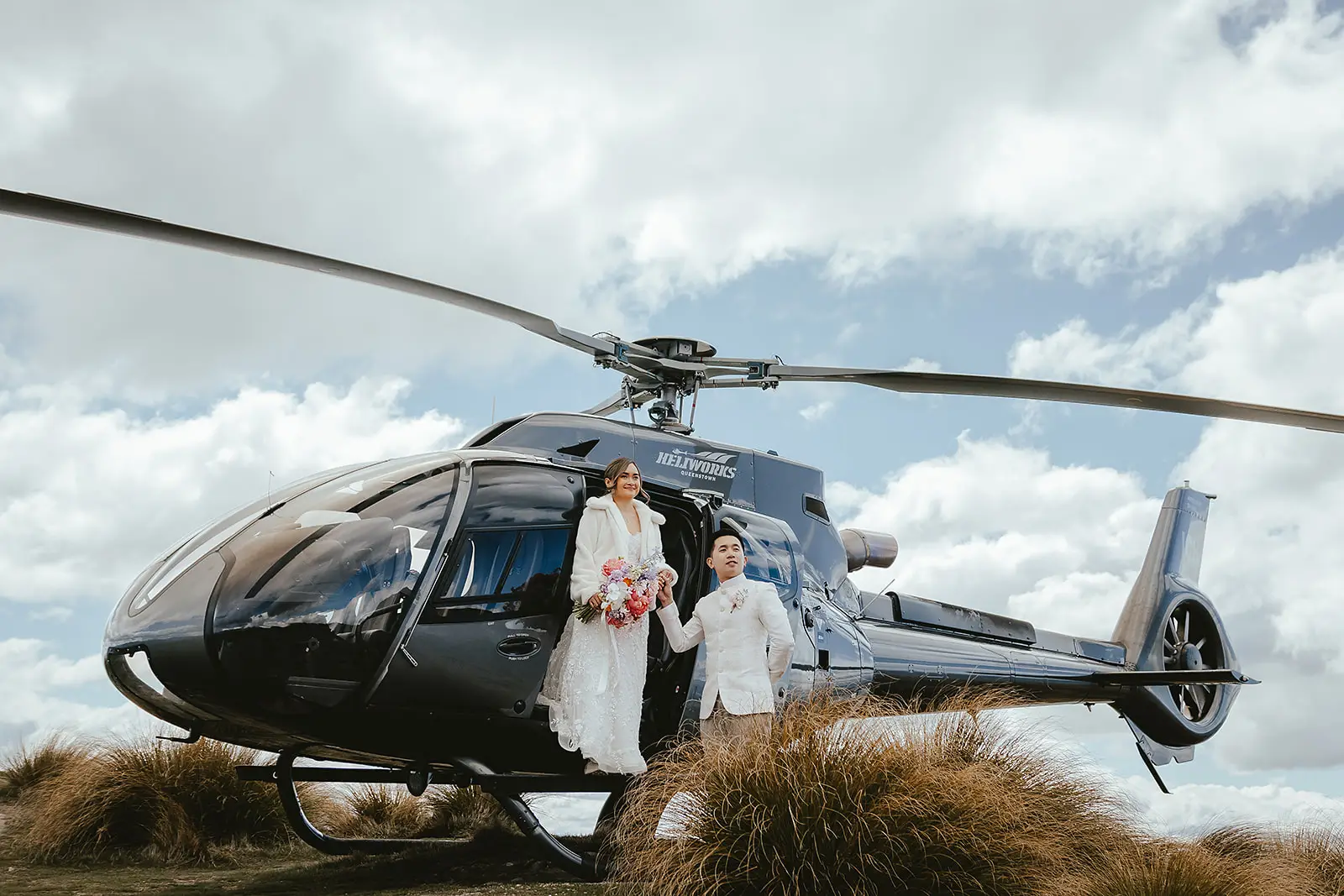
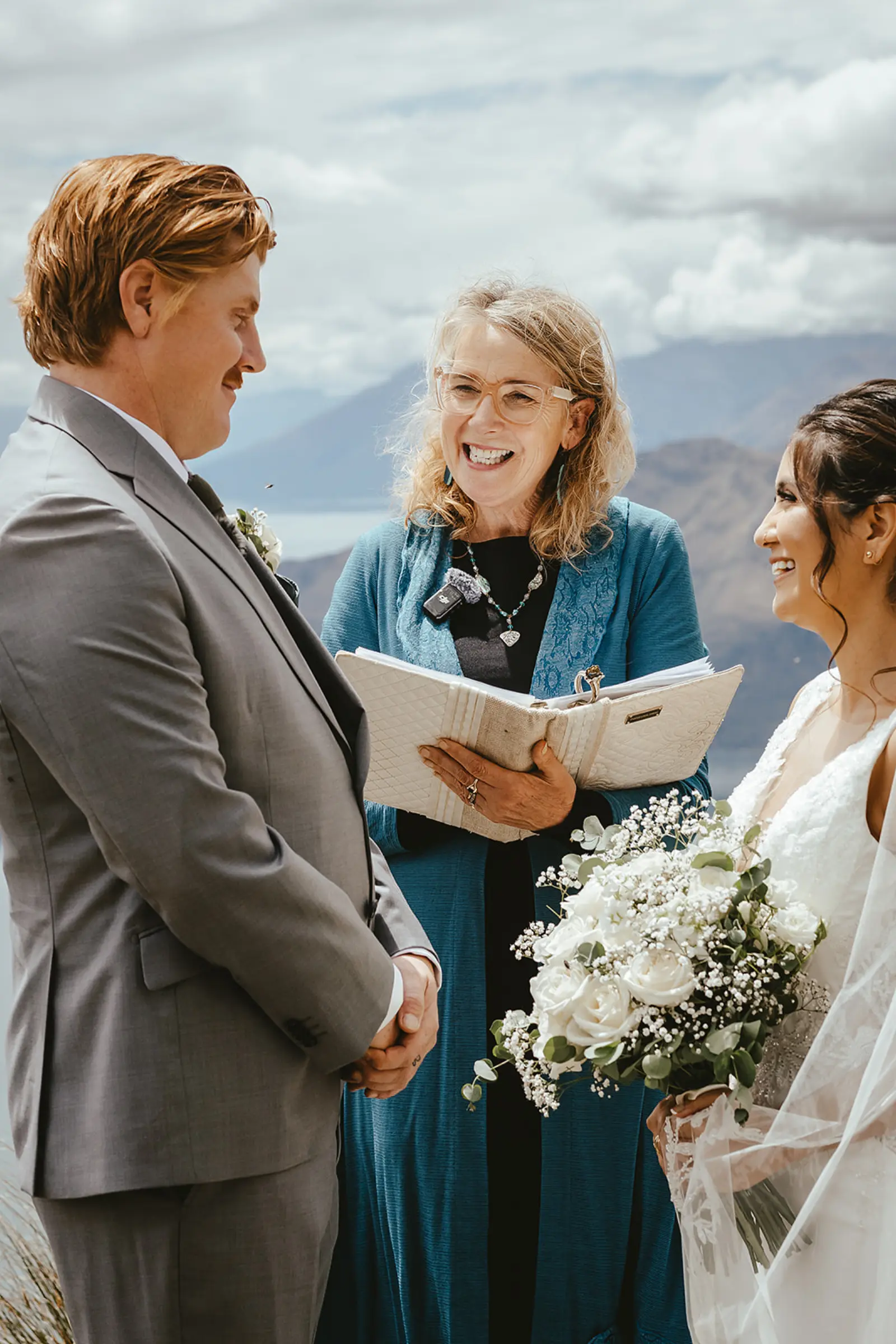
Photography © Wonder Weddings. All images on this page were made by the Wonder Weddings team on real elopement days and may not be reused without permission.
Fly-by and hover sequences
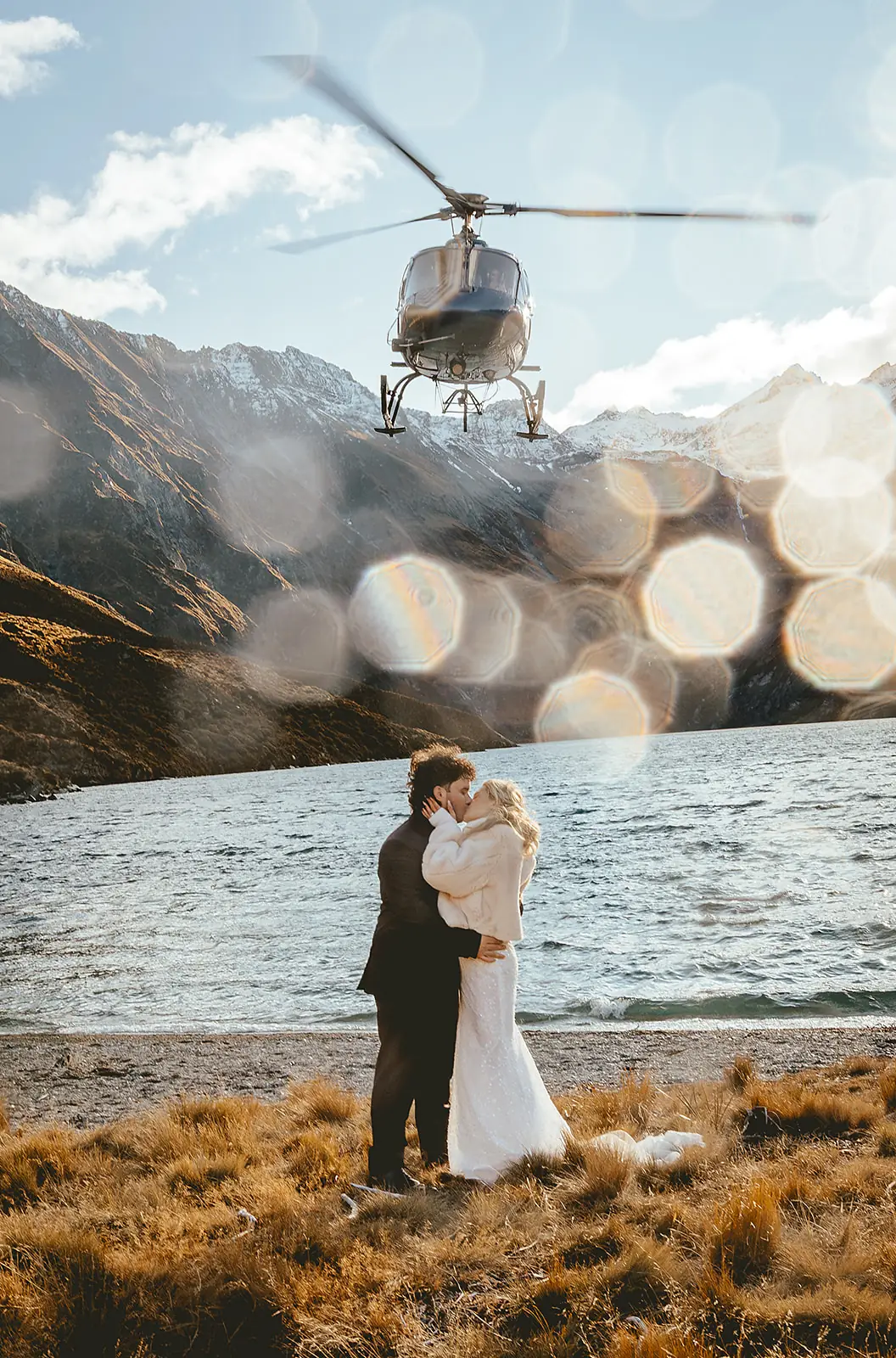
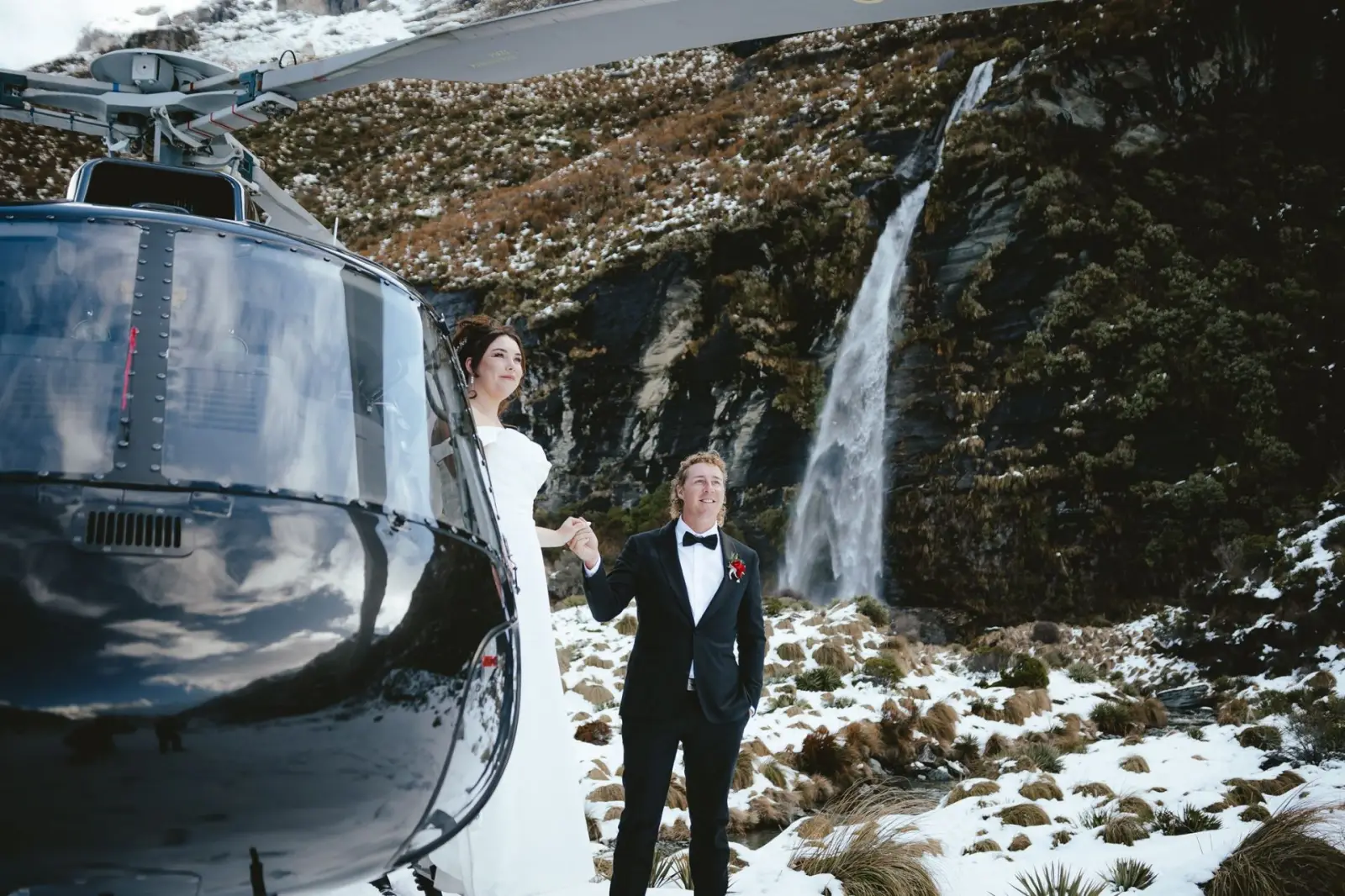
The frame where the aircraft sweeps past behind you is not taken during your landing. The pilot drops you and the photographer on the ridge, lifts off, and flies a set pass while you hold position. It costs extra air time, needs settled wind, and is not possible at every site, so ask for it explicitly rather than assuming it is included.
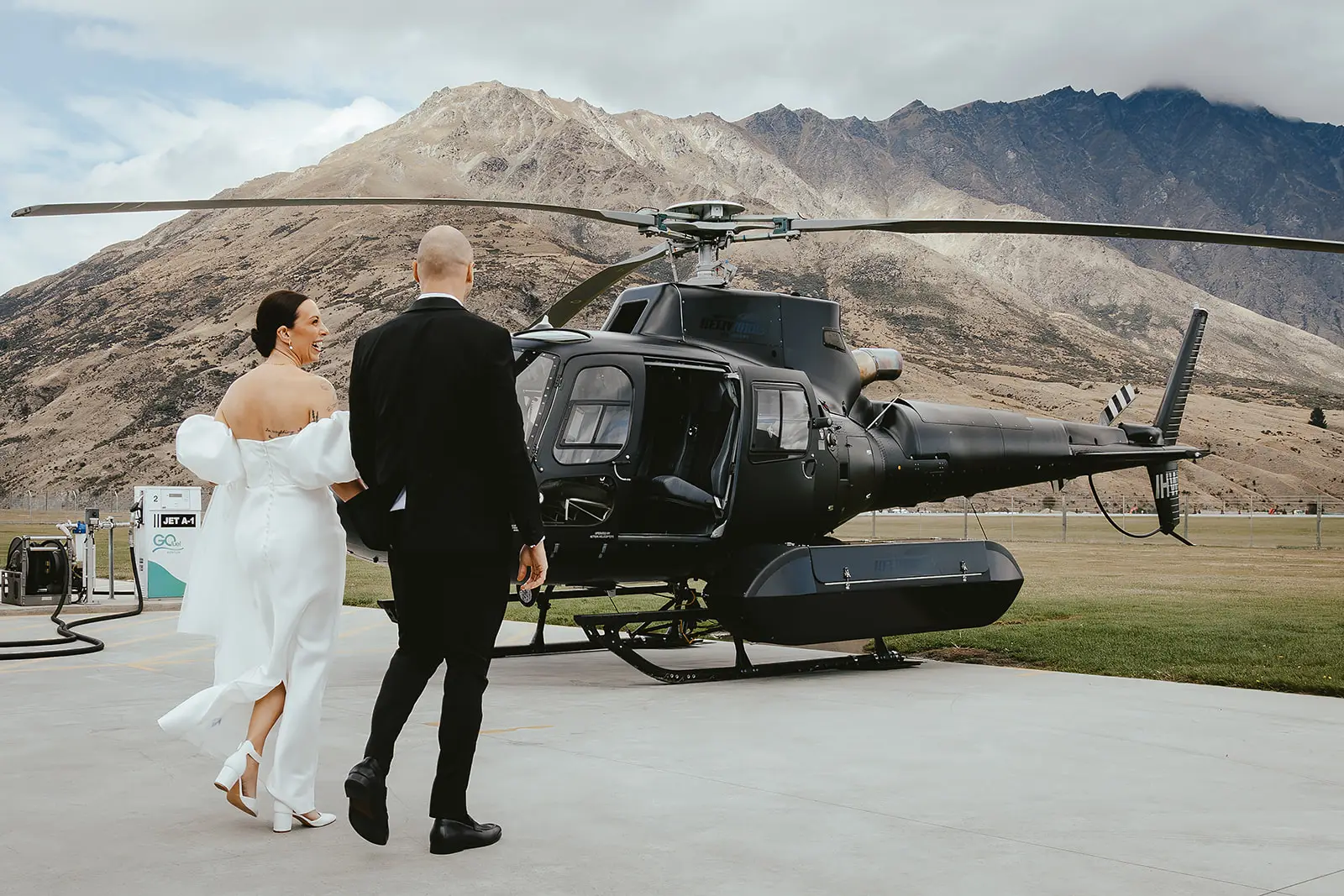
Photography © Wonder Weddings. All images on this page were made by the Wonder Weddings team on real elopement days and may not be reused without permission.
Watch a heli day
A five-landing destination day departing Queenstown, and a multi-landing day across several summits. Watch how much of each day is travel before you commit to more than one landing.
Bryne and Jade: a five-landing helicopter elopement
A destination heli day departing Queenstown with Wonder Weddings, five landings across alpine, lake and glacier country, filmed by Eureka Films.
Planned by Wonder Weddings, filmed by Eureka Films.
A multi-landing helicopter elopement
One day, five alpine landings that can only be reached by air. Useful if you are weighing a single landing against a multi-landing day.
Planned by Wonder Weddings, filmed by Eureka Films.
If that second list describes you, an elevated drive-up viewpoint gets you eighty per cent of the drama with none of the fragility. That is not a consolation prize, it is what plenty of well-advised couples choose on purpose.
For what a flight does to the total, see published Queenstown helicopter wedding pricing and the wider cost breakdown.


Premium Heli Experiences
Heli Elopements is the specialist helicopter collection by Wedding Machine Group, the group behind Wonder Weddings. It is designed for couples exploring full-day journeys, multiple landings and remote Southern Alps landscapes.
Best for
wonderweddings.co.nz
Best for
helielopements.co.nz
Heli Elopements is the specialist helicopter-elopement collection by Wedding Machine Group, the Queenstown group that publishes this resource.
From the journal: Why remote, experience-first days are the trend right now.
Heli enquiries
Wonder Weddings runs helicopter elopements across the Wakatipu and will tell you plainly if your month, group size or budget makes a ground ceremony the better call.
Planning and packages are provided by Wonder Weddings, who create and maintain this resource. Links open the Wonder Weddings site in a new tab.