Journal
Six Queenstown wedding trends right now
Queenstown is not getting fewer weddings. It is getting different ones. Here are the six shifts that show up most clearly in 2026, what the published data actually says about each, and what they mean if you are still choosing a format.
27 August 2026 · 11 min read · Written in Queenstown
The short answer: couples are choosing smaller, cheaper to stage and more mobile days. Elopements and micro-weddings have moved from an alternative to a default, cost has become the main reason people leave the venue model, and everything else on this list, weekday dates, split celebrations, sunrise ceremonies, is a variation on the same instinct.
1. Elopements and micro-weddings are the mainstream choice
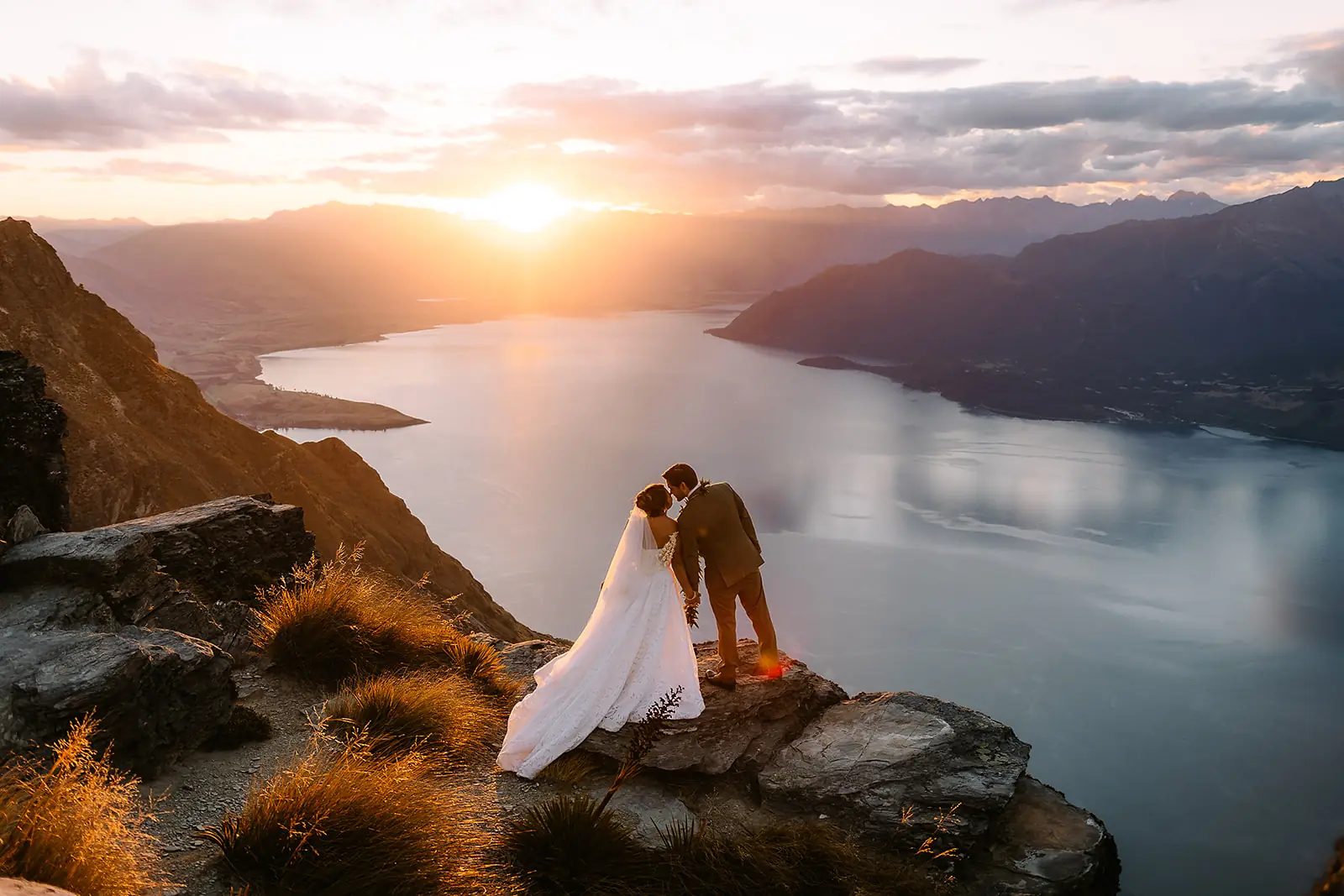
The clearest change is guest count. Industry commentary published in April 2026 on Queenstown specifically describes the same pattern we see in our diary: couples deciding that a large guest list turns the day into an event-management exercise, and choosing a ceremony with a handful of people or none at all instead. That reporting links the shift to two things: planning fatigue, and coverage that documents real moments rather than staged ones.
It is not only a Queenstown story. In July 2026, Celebrants Aotearoa, the national body for professional celebrants, said couples across the country are rethinking the big traditional wedding as costs climb, and named smaller ceremonies, weekday weddings, registry ceremonies and backyard celebrations as part of the same move away from one-size-fits-all.
What that means in practice is less obvious than it sounds. An elopement is not simply a smaller wedding. It removes the fixed points that normally hold a day together: a room booked from a set hour, a caterer with a service time, a hundred people who need to be told where to be. Take those out and the day can move with the weather, which in the Wakatipu is the single most valuable planning property you can buy.
The trade-off is real. Without a venue you inherit the jobs a venue quietly does: access, wet-weather cover, seating, sound, permits where they apply, and getting people to a site that may be twenty minutes up a gravel road. Those jobs do not disappear. They move to you, or to a planner.
Who this suits
- Couples travelling to New Zealand with a small group, or none.
- Anyone whose priority is the landscape rather than the guest experience.
- Couples who can hold a flexible window rather than a single fixed hour.
Trend two
Cost is doing most of the pushing
Queenstown sits at the top of New Zealand's regional wedding cost range in published 2026 reporting. That number is the reason a lot of couples change format.
2. Cost pressure is moving couples out of the venue model
There is no official New Zealand wedding-spend statistic, so every number below comes from private industry reporting. Read them as market context, not as prices.
- One 2026 national breakdown puts the typical New Zealand wedding at NZ$30,000 to NZ$50,000, notes that around three quarters of couples actually spend under NZ$25,000, and finds venue and catering together absorb roughly half of a budget. Source.
- A separate region-by-region estimate places Queenstown at the top of the national range, around NZ$45,000, on destination demand and limited venue supply. Source. That is one publisher's estimate for the region, not a measured average and not a quote for your day.
Put those side by side and the pattern is clear enough: the venue-and-catering half of a budget is exactly the half that scales with guests, and Queenstown charges a premium on it.
What a Queenstown wedding costs when you drop the reception
The reaction we see is not couples spending less overall so much as couples spending differently. When the reception line disappears, the money does not vanish, it moves. It goes into access (a flight, a boat, a 4WD transfer), into coverage (photography and increasingly film), into a longer window of a planner's time, and into accommodation for a small group rather than catering for a large one.
This is why comparing a venue quote against an elopement package rarely works line-by-line. They are different products. Our Queenstown wedding and elopement cost guide breaks the components out so you can see which costs are fixed, which scale with guests, and which are genuinely optional, and what Queenstown elopement packages usually include shows where the lines normally fall.
Get a real number
Ask for current Queenstown pricing rather than an average
Averages tell you the shape of the market. Wonder Weddings can tell you what your specific format, guest count and date actually cost this season.
Planning and packages are provided by Wonder Weddings, who create and maintain this resource. Links open the Wonder Weddings site in a new tab.
3. Experience-first days, documented on film
The third shift is about how the day is structured. Rigid run sheets are giving way to loose ones: a long lunch that drifts into golden hour, portraits taken when the light is right rather than at 4pm because the schedule says so, and far fewer formal set pieces. New Zealand trend coverage for 2026 describes the same thing nationally, flow and flexibility in, jam-packed schedules out, and the Queenstown reporting ties the rise of elopements directly to videography that captures real moments instead of staged perfection.
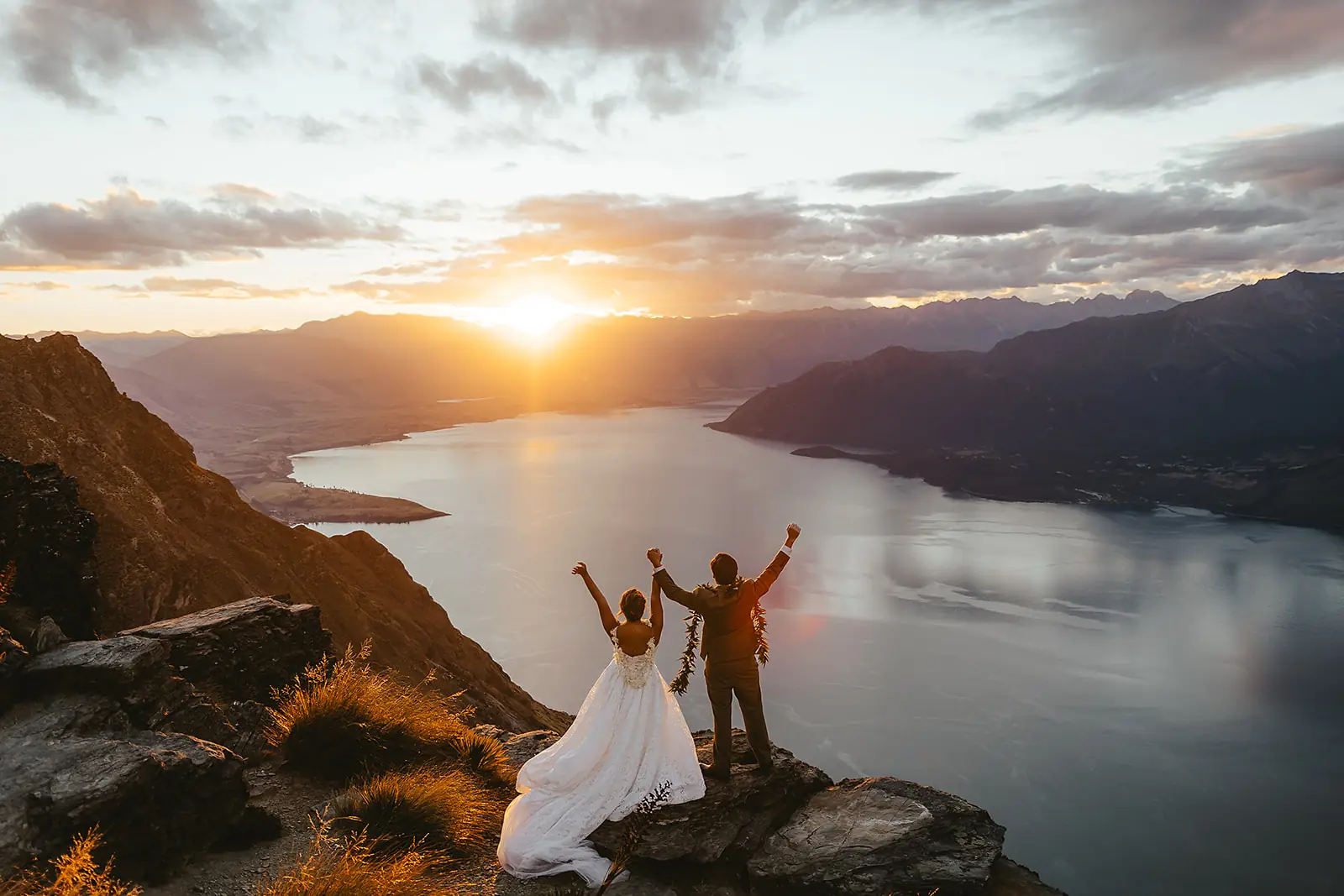
Helicopter access is the sharpest expression of this, and it is the format that has grown fastest here. A flight buys a ceremony site that nobody else can reach that hour, and it compresses travel that would otherwise eat the middle of the day. Wonder Weddings has written about why remote helicopter ceremonies became a breakout format, and our own guide to helicopter weddings in Queenstown covers how those days run when the weather does not cooperate, which is the part that decides whether the trend works for you.
The honest limit: an experience-first day still needs a spine. Someone has to hold the licence, the celebrant, the flight window and the backup site. Loose timelines work because a planner is absorbing the structure, not because the structure has gone.

Trends four to six
The quiet ones: weekdays, split celebrations, sunrise
Three smaller shifts that all come from the same place, wanting the day to fit the couple rather than the calendar.

Where it is heading
Fewer fixed commitments, more room to move
Every trend on this list buys the same thing: the ability to change the plan on the morning without losing money.
4. Weekday and shoulder-season dates
Celebrants Aotearoa specifically named weekday weddings in its July 2026 comment on couples rethinking the big wedding. In Queenstown the effect is sharper than elsewhere, because peak-season Saturdays are the scarcest thing in the valley. A Tuesday in late April usually means better supplier availability, quieter ceremony sites, and vendors who are not running a second wedding that afternoon.
The two things to check before you commit: your guests need more notice for a weekday, and shoulder season brings shorter daylight. Our month-by-month guide to eloping in Queenstown sets out what each part of the year actually does to light, access and crowd levels.
5. Marry now, celebrate later
This is the trend we get asked about most and see written about least. The legal ceremony happens here, just the two of you and two witnesses, and the party happens at home weeks or months afterwards with everyone who could not fly. Celebrants Aotearoa listed it by name as part of the shift away from the single enormous event.
It works well because it separates two things that never really belonged together: the legal moment, which needs a licence and a celebrant, and the celebration, which needs a room and a caterer. Split them and each gets cheaper and easier. The paperwork is the same either way, and it must be done in New Zealand for a New Zealand marriage. See the legal requirements for the licence timing.
6. Sunrise ceremonies and snow-season landings
Two format choices that were once unusual are now routine requests. Sunrise ceremonies get the best light of the day, the calmest air for a flight, and sites that are completely empty; the cost is a very early start. Winter and early-spring landings buy snow underfoot and a landscape that photographs like nowhere else, at a time of year when Queenstown is cheaper to visit.
Both need honest weather planning rather than optimism. Winter alpine sites are cold and exposed, snow depth changes what a helicopter can safely land on, and a sunrise slot leaves you no room to slide the ceremony later in the day. They are wonderful when they are planned properly and miserable when they are not. Our locations comparison flags which sites hold up in which season.
What is in and what is out
In
- Guest lists under twenty
- Loose timelines that follow the light
- Weekday and shoulder-season dates
- A film of the real day
- Marry now, celebrate at home later
- Sunrise light and snow landings
Out
- Two hundred people you half know
- Minute-by-minute run sheets
- Peak Saturday in February at any price
- An hour of posed group shots
- One enormous single event
- Waiting for perfect summer weather
What all six have in common
Every one of these shifts trades fixed commitments for flexibility. That is a good trade in Queenstown, where the weather is local and changes fast, and a poor one if you need certainty months in advance for travelling guests. Decide which of those two you value more, and the format answers itself.
What this does to booking lead times
Smaller does not mean later. Peak-season Saturdays and the popular helicopter sites still go twelve months out, because there are only so many machines and pilots in the valley. What the trend really buys you is a shorter tail: a two-person day can be arranged in weeks if the licence timing allows, where a venue-led wedding cannot. Weekday and shoulder-season dates are the ones with genuine late availability.
Next steps: compare ceremony locations and their access types, then read what each month usually does before you fix a date.
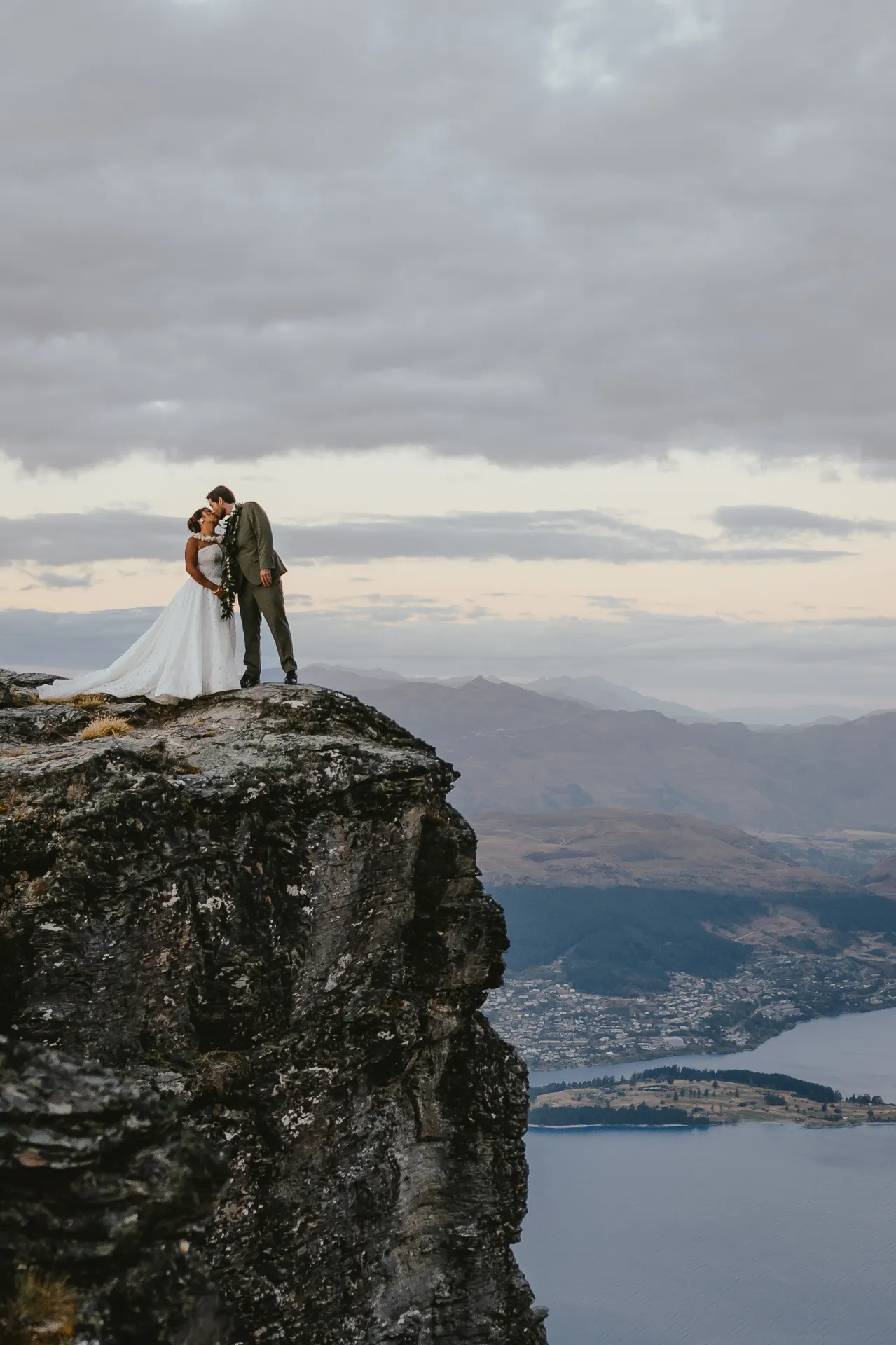
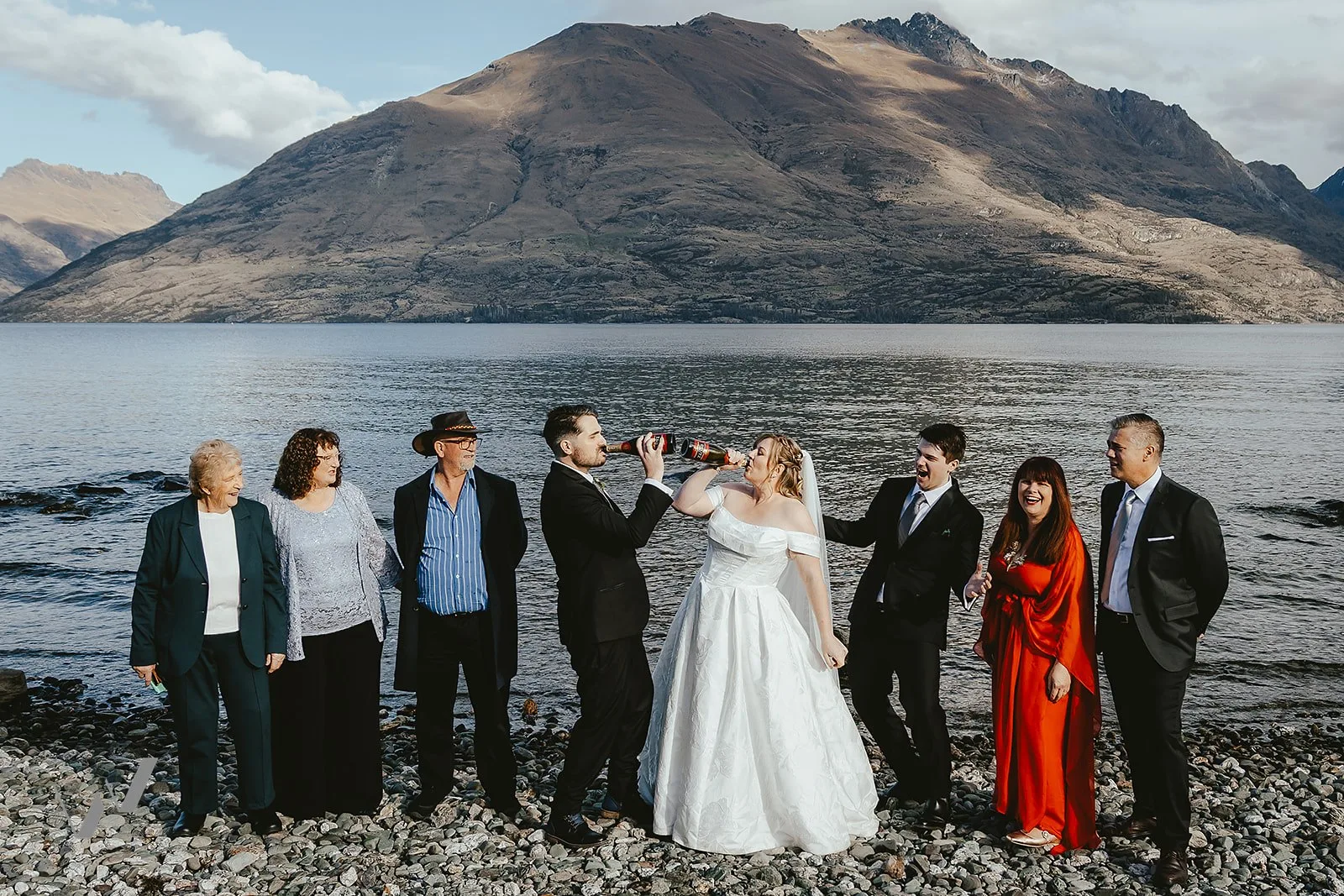
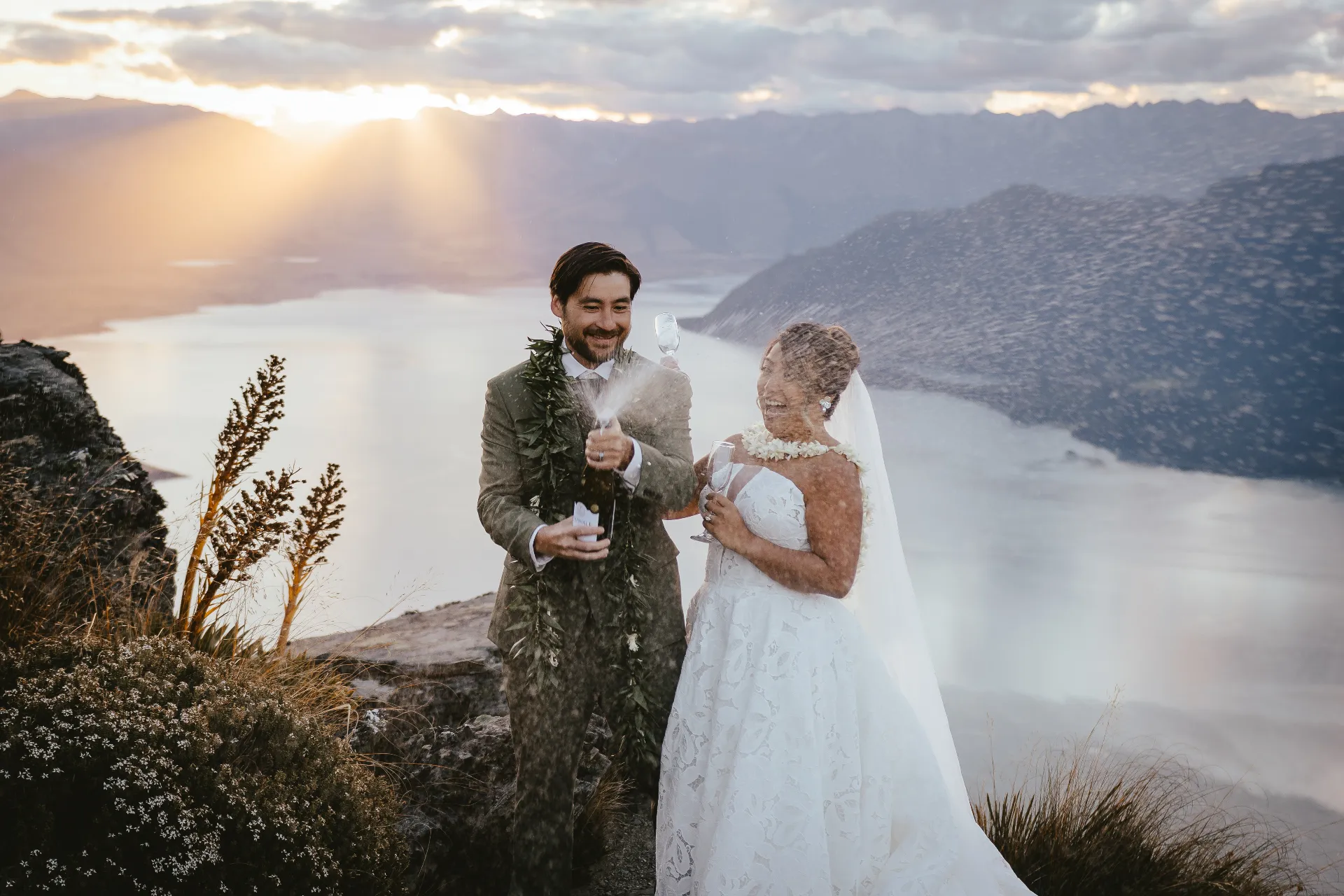

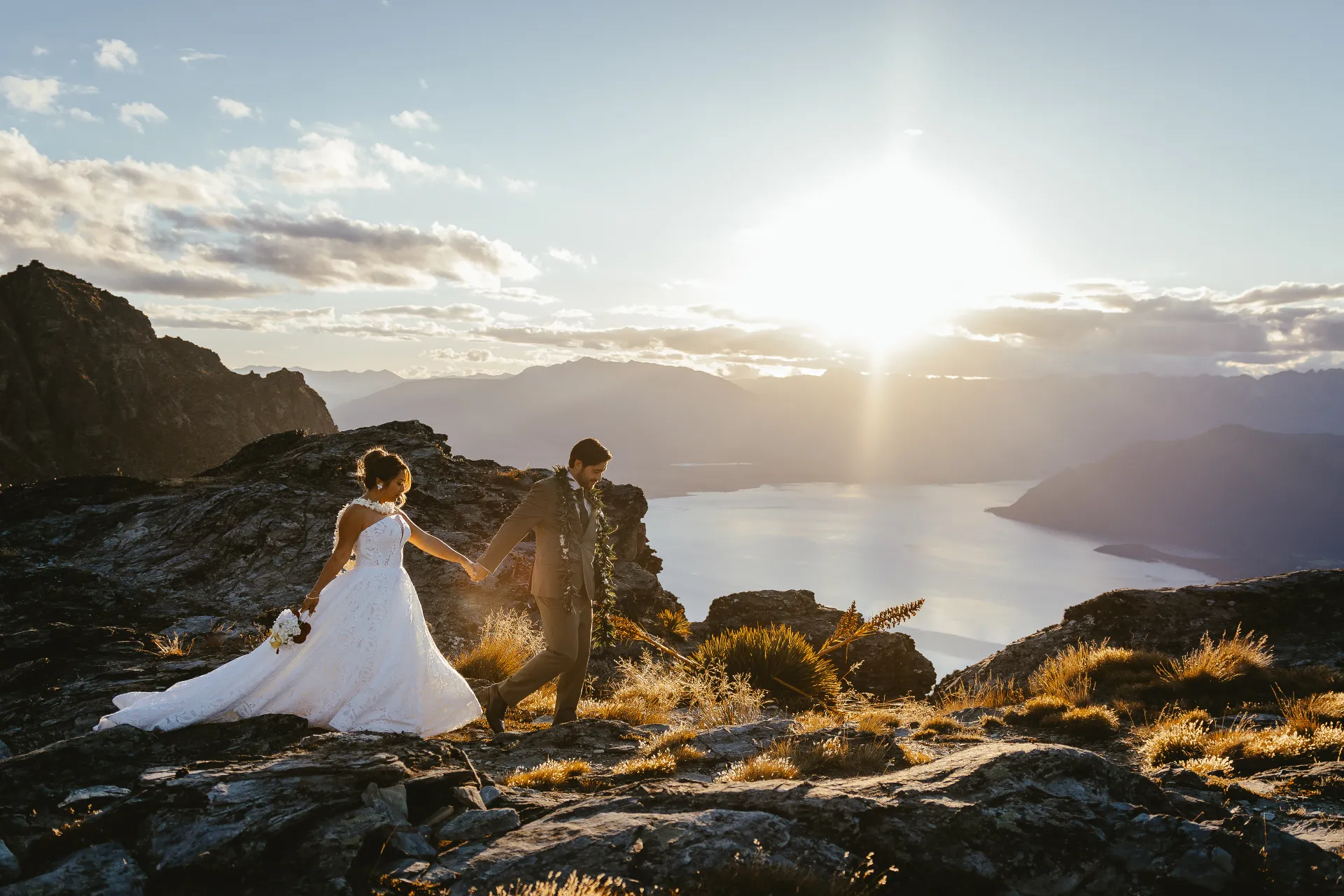
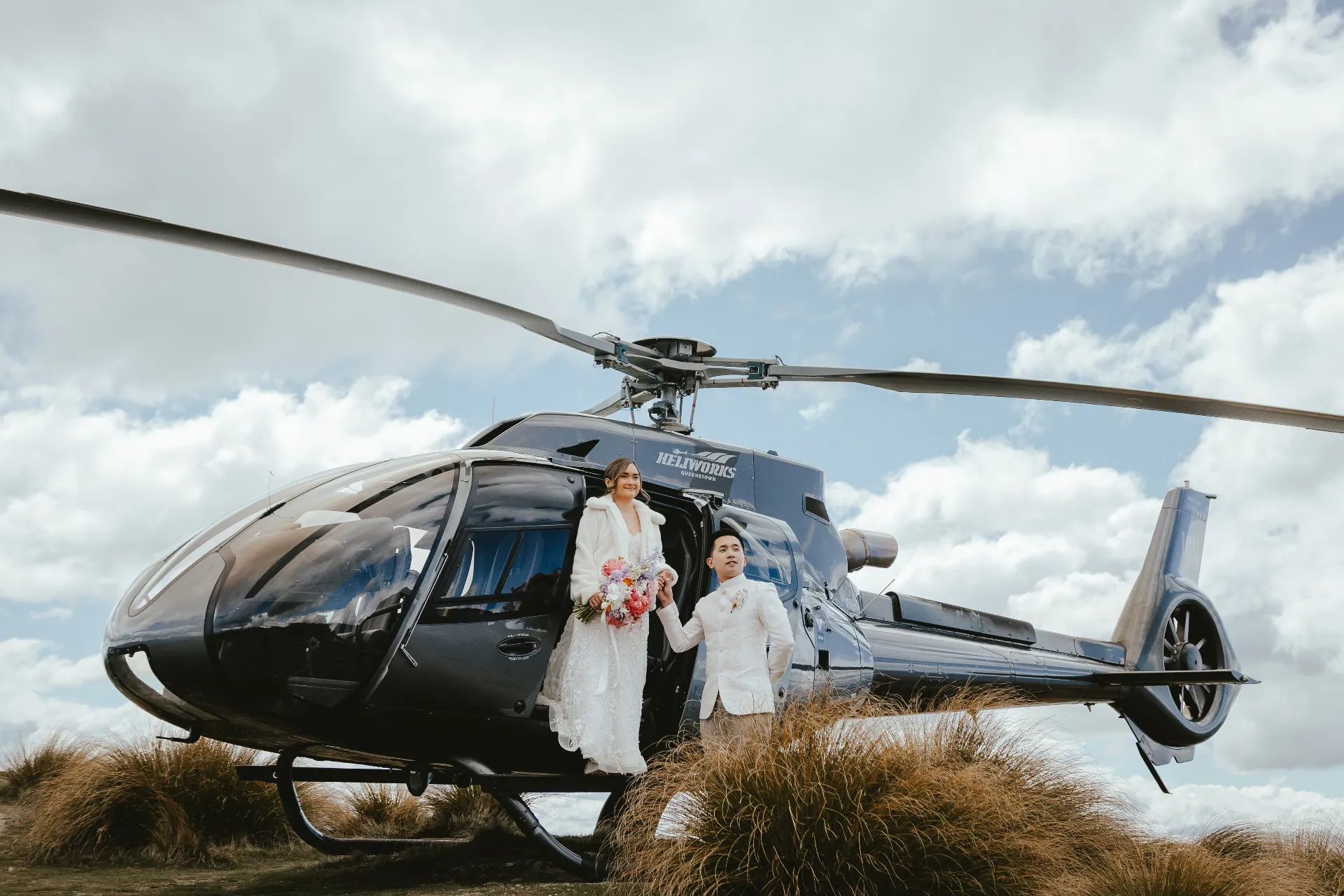
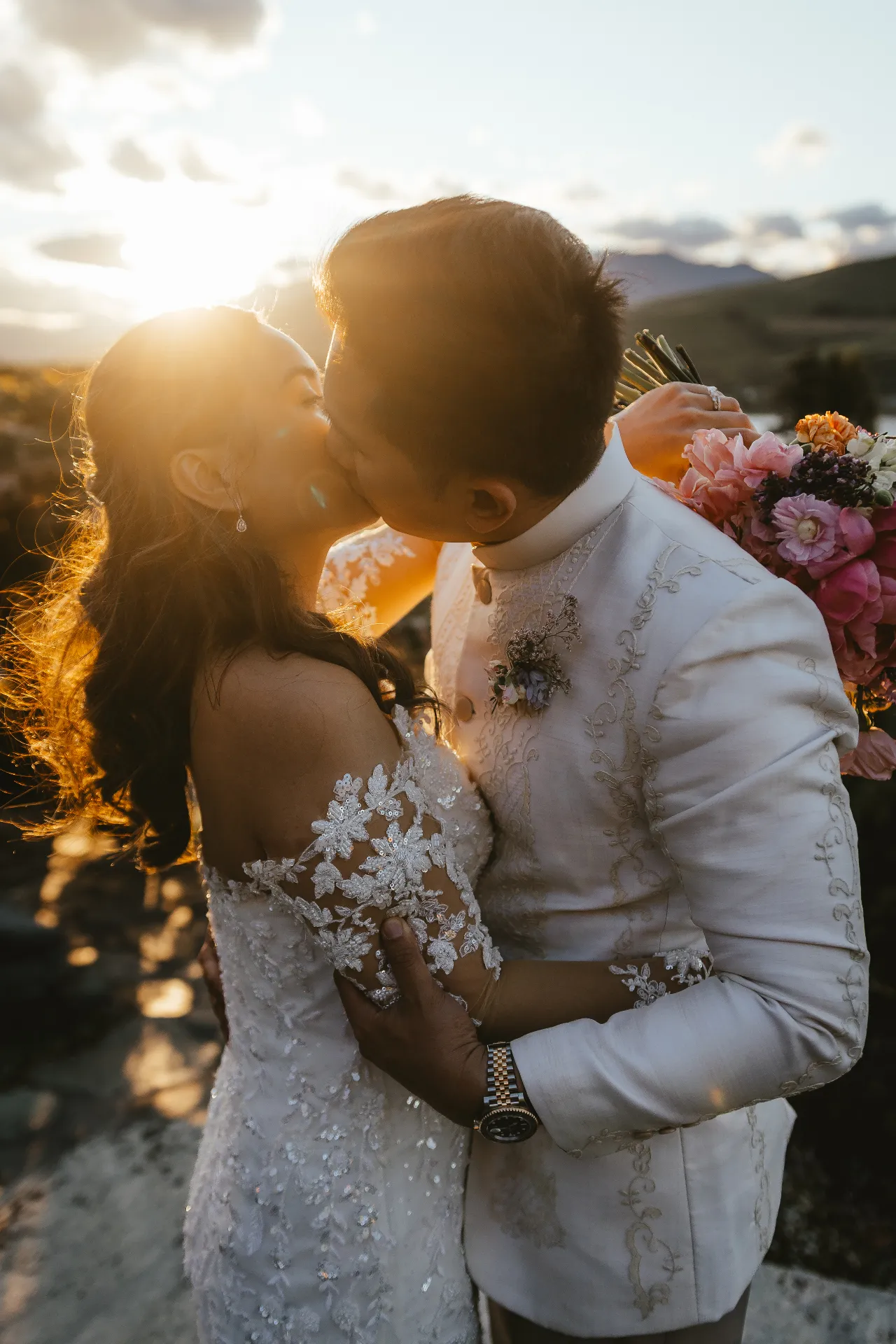
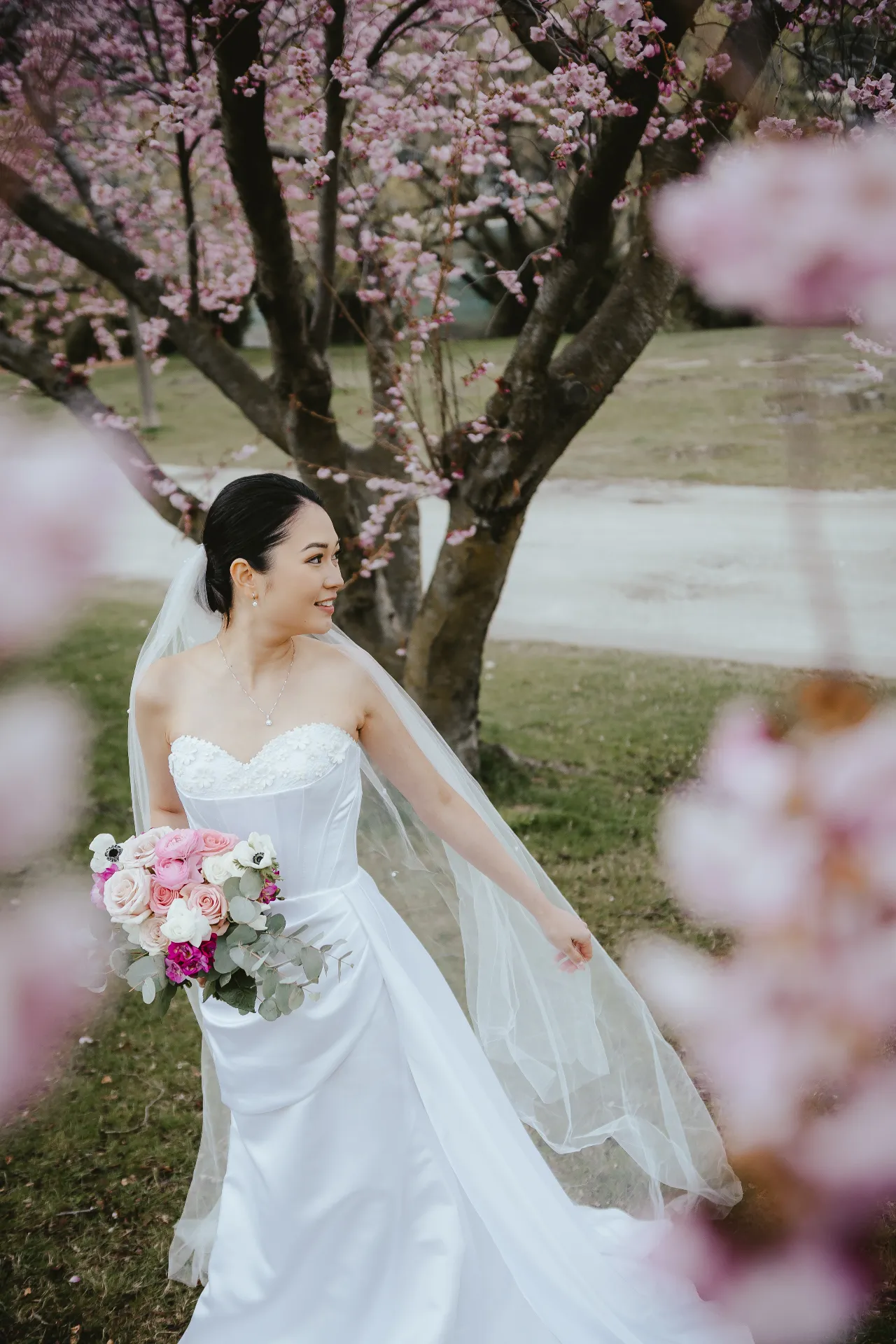


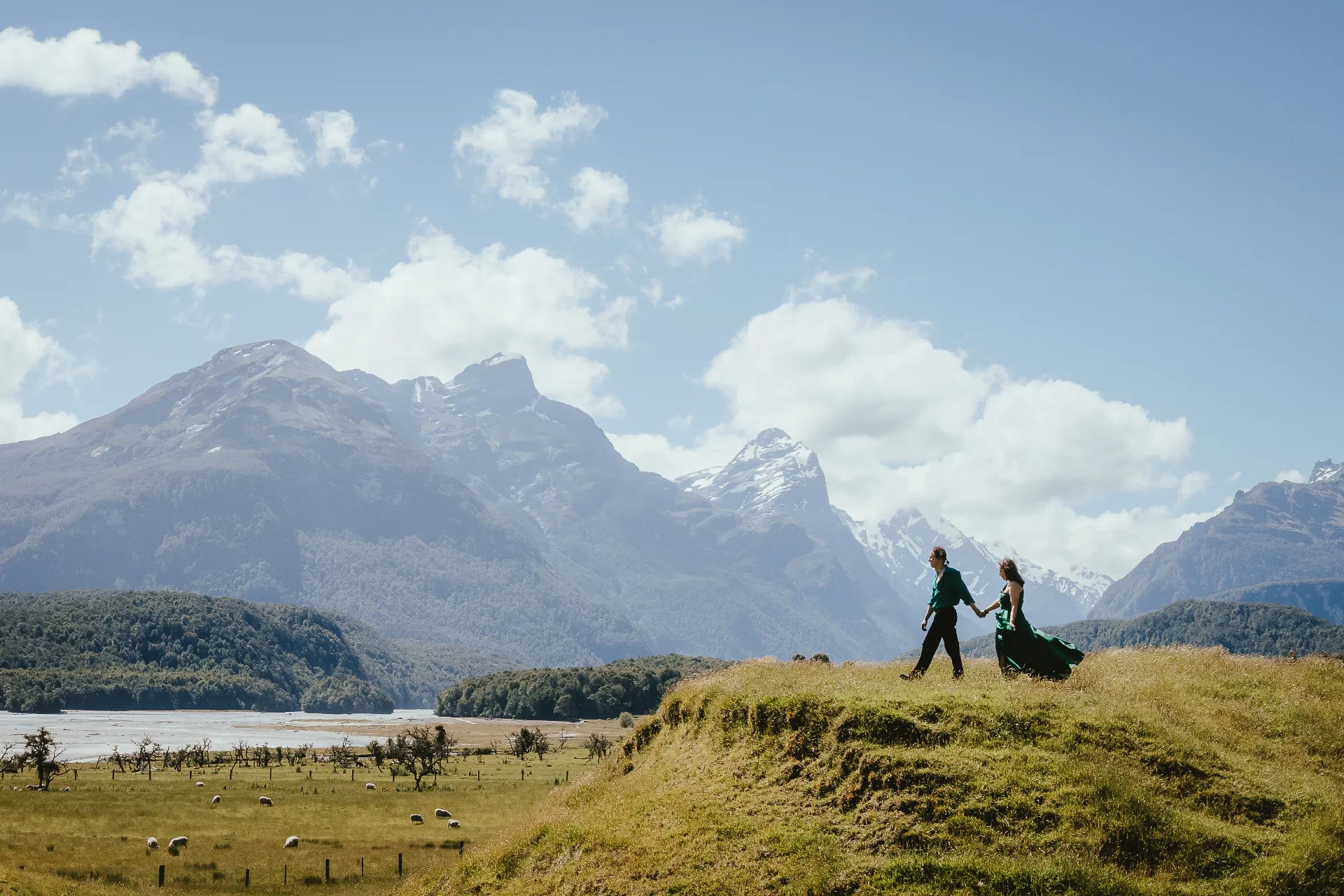
Photography © Wonder Weddings. All images on this page were made by the Wonder Weddings team on real elopement days and may not be reused without permission.
Keep reading
- Venues or open-air ceremony sites
Booked venue or open landscape? Guest numbers, weather cover, cost shape and the planning load each one puts on you.
- Planning a Queenstown elopement with guests
Four guests or twenty? How head count changes the ceremony site, helicopter plan, transport, timeline, weather backup and dinner.
- What elopement packages usually include